

In the world of modern electronics, the AC to DC power supply acts as the invisible bridge between household wall sockets and the sensitive digital circuits that power our lives. Yet, behind this seemingly simple device lies a set of critical specifications—voltage, current, and wattage—that directly determine the compatibility, safety, and efficiency of any electronic system.
Understanding these parameters isn’t just for engineers; it’s essential knowledge for hobbyists, product designers, and system integrators alike. In this article, we’ll break down these three fundamental specifications, how they relate, and why they matter when choosing or designing a power supply.
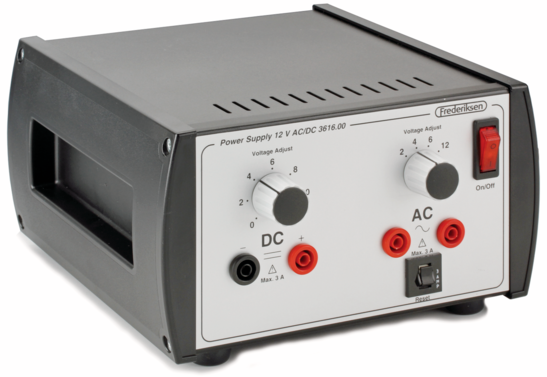
Voltage (V) is the electrical pressure that pushes current through a circuit. In a DC system, voltage is typically a fixed value—such as 5V, 12V, or 24V—depending on what the device or system requires.
A lower voltage might not be enough to power the device.
A higher voltage can damage sensitive components, leading to failures or permanent damage.
Key Point: Always match the output voltage of the power supply exactly with your device’s required input voltage.
Example: If your LED driver circuit is designed for 12V DC, supplying 9V might result in dim lights, while 15V might burn it out.
Current (A) is the rate at which electricity flows through a circuit. It’s determined by how much power the device consumes, not necessarily how much the power supply can deliver.
A common misconception is that the power supply “pushes” current into the device. In reality, the device “draws” the current it needs.
Golden Rule: The power supply’s current rating must be equal to or greater than the maximum current your device requires.
Too little current = the supply overheats or shuts down.
More than enough current = totally fine (the device only takes what it needs).
Example: If your microcontroller board draws 2A, a 5V/3A power supply is appropriate. A 5V/1A supply would be inadequate.
Wattage (W) is the total power the supply can deliver and is calculated by multiplying voltage and current:
W = V × A
It tells you how much total energy the power supply is capable of delivering continuously.
If a power supply is rated at 12V 5A, it can deliver 60W of power.
Choosing a power supply that matches or exceeds your system’s total wattage demand ensures stable operation.
Tip: Always add a 25–30% safety margin when estimating power needs. If your system uses 40W, choose a supply rated for at least 50W.
Let’s say you’re designing a small desktop amplifier. The specs indicate it needs:
DC voltage: 15V
Current draw: 2A
Power consumption: 30W
A suitable AC to DC power supply might be labeled 15V 3A 45W. This gives you:
Exactly the right voltage,
Extra current headroom for peak usage,
And sufficient wattage to ensure thermal stability and long lifespan.
What to avoid: Using a 15V 1A 15W supply in this case would result in overheating, voltage drop, or abrupt shutdown under load.
When browsing power supplies, you’ll often see additional markings and specs such as:
Output ripple: Indicates voltage stability. Lower ripple is better for sensitive devices.
Efficiency rating: Expressed as a percentage—higher is better.
Load regulation: How much voltage changes under varying loads. Important for precision applications.
Certifications: Such as UL, CE, or RoHS, indicating safety and compliance.
Understanding voltage, current, and wattage isn’t just about reading labels—it’s about ensuring compatibility, reliability, and safety for your electronic systems. Whether you're powering a DIY robot, a server rack, or an industrial sensor, the right AC to DC power supply starts with mastering these three specs.
Voltage must match your device.
Current must be sufficient.
Wattage must cover the total power load—plus margin.
When in doubt, over-specify (within reason), and always source from trusted manufacturers. The power supply may not be the most glamorous part of your project, but it's the one piece you can't afford to get wrong.

