
A powerful GPU and a high-core CPU might steal the spotlight in gaming rigs and workstations—but none of it runs without a dependable power supply. The PSU (Power Supply Unit) is the unsung hero of a high-performance PC, quietly ensuring that every component receives stable and sufficient power. Choosing the wrong one can lead to instability, reduced hardware lifespan, or even catastrophic failure.
In this guide, we’ll break down what truly matters when selecting the best computer power supply for gaming systems and professional workstations—without relying on outdated myths or marketing fluff.
Before choosing a PSU, the first step is calculating your system’s total power consumption. This includes:
CPU: High-performance CPUs (e.g., Intel i9 or Ryzen 9) can consume 125W or more under load.
GPU: The biggest power draw—modern GPUs like RTX 4080 or RX 7900XTX can use 300W–450W.
Motherboard, RAM, Storage, Fans, PCIe Cards: Add another 100–150W depending on configuration.
Pro Tip: Use a reliable power calculator, but always add a 20–30% headroom for future upgrades, peak load spikes, and optimal efficiency.
More watts doesn’t always mean better—it means right-sizing the power envelope.
Gaming Builds: Most mainstream gaming PCs are fine with 650W–850W.
High-End or Multi-GPU Systems: Workstations and enthusiast setups may need 1000W or more.
Efficiency Matters: A 750W PSU running at 50–70% load is often more efficient and quieter than a 1000W unit barely used.
The 80 PLUS efficiency rating tells you how well a PSU converts AC power into usable DC with minimal loss.
Basic Tiers: 80 PLUS Bronze and Silver are fine for budget-conscious users.
Performance Tiers: Gold, Platinum, and Titanium offer higher efficiency, less heat, and quieter operation—ideal for demanding or always-on systems.
Remember: Higher efficiency means lower electricity bills and less fan noise, especially under load.
This one’s often misunderstood.
Single-Rail PSU: One large +12V rail powers everything. Easier for high loads, but less protected if there's a short.
Multi-Rail PSU: Separates loads into multiple +12V rails with independent current protection—safer for sensitive or distributed systems.
For most gamers and prosumers, single-rail designs are sufficient and safe—as long as the PSU includes OCP (Over-Current Protection).
Cable management is more than just aesthetics—it’s airflow, thermals, and future expandability.
Non-Modular: Cheapest, but all cables are permanently attached—messy and inflexible.
Semi-Modular: Fixed essential cables (like 24-pin and CPU), but detachable GPU/SATA cables.
Fully Modular: All cables are removable. Best for clean builds and custom cabling.
For modern builds, especially in tempered glass cases, fully modular is the way to go.
Not all PSUs are created equal. Look for units that include:
Japanese capacitors for longevity and temperature resilience
Active Power Factor Correction (PFC)
Full suite of protections: OVP (Over Voltage), OCP (Over Current), SCP (Short Circuit), OTP (Over Temperature), and UVP (Under Voltage)
Brand reputation also matters. Look for PSUs from companies known for internal design quality, not just flashy labels.
Form Factor: Most builds use ATX, but SFX units are for compact systems.
Cable Length and Connector Count: Ensure enough CPU and GPU connectors for dual processors or multi-GPU setups.
Zero-RPM Fan Mode: Great for silence under low load, ideal in quiet workspaces or home studios.
Even if your current GPU and CPU are mid-tier, consider what upgrades you might make over the next 2–3 years.
Want to switch from RTX 4060 to 5090? That’s a 250W jump.
Planning more NVMe drives or liquid cooling? Budget more wattage and connectors.
Choosing a slightly oversized, high-efficiency PSU now avoids expensive replacements later.
The PSU might not get the fanfare of your GPU or the prestige of your CPU, but in the world of gaming and professional computing, it is the foundation. A solid power supply ensures stability during long rendering sessions, intense gaming battles, and overclocked benchmarks. It guards your investment and provides the breathing room your system needs to perform without compromise.
So take your time, read the spec sheets, check reviews—not for flashy RGB, but for ripple suppression, efficiency under load, and long-term reliability. Your rig deserves it.
Because a great build starts with stable power.

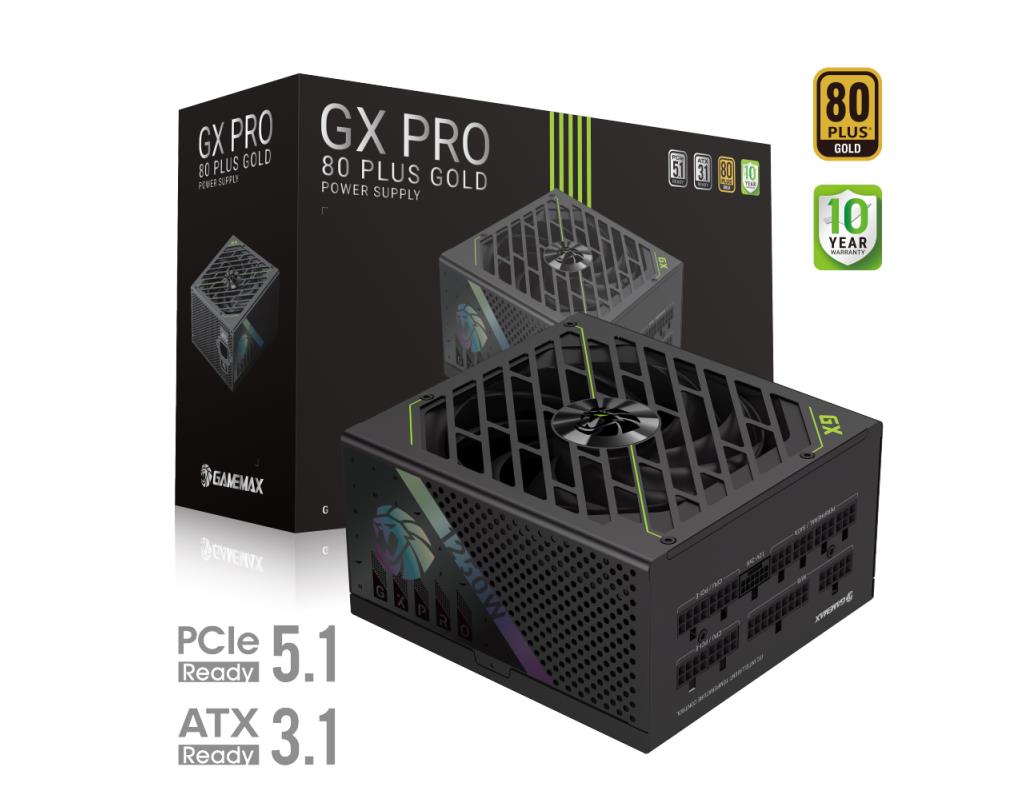
GX PRO 1250G 80 Plus Gold Modular Power Supply: ATX3.1 Ready, Silent Cooling, & Premium Durability
• 80 Plus Gold Efficiency & Quiet Operation: Achieves 90% efficiency under typical loads with APFC+LLC+DC-DC design, minimizing power waste and noise.
• Premium Durability & Reliability: Built with Japanese 105°C capacitors and solid capacitors for long-term stability and performance.
• ATX3.1 & PCIe5.1 Ready: Features a native 12V-2x6 connector for seamless RTX 40/50 GPU compatibility and efficient power delivery.
• Advanced Thermal Management: 13.5cm FDB fan with intelligent temperature control ensures quiet cooling and optimal heat dissipation.
• Modular Design & Robust Protection: Fully modular layout with dual-stage EMI filtering and NTC thermistor safeguards against surges, while gold-plated cables ensure durable, high-conductivity connections.

