
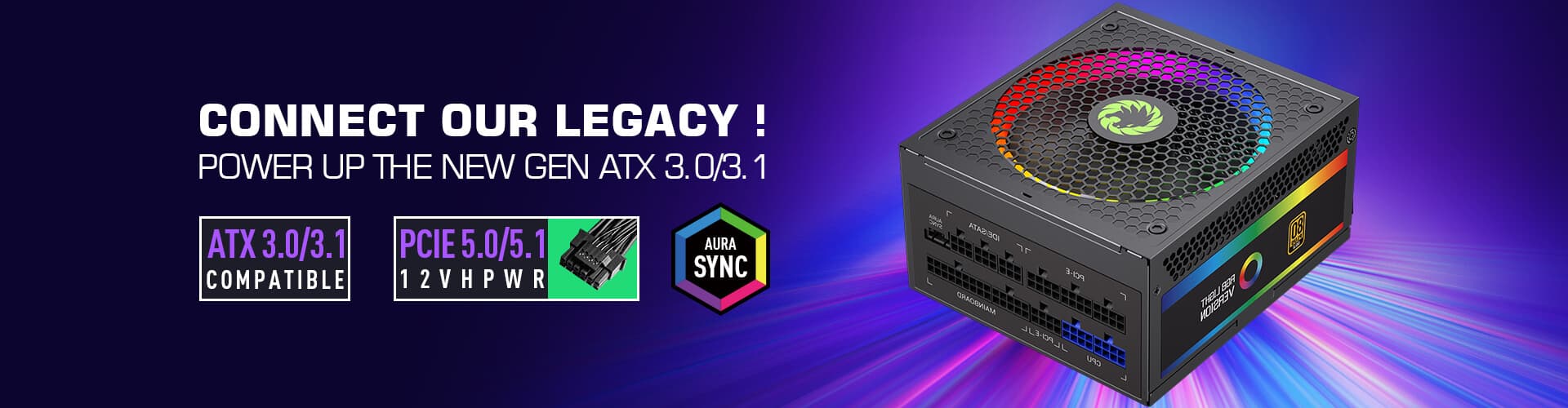
Since the launch of the RTX 50 series graphics cards, discussions around performance, pricing, and technological advancements have dominated the gaming and hardware communities. For gamers, creators, and tech enthusiasts alike, the question remains: Should you choose the RTX 50 series or stick with the RTX 40 series?
This article provides a detailed, practical comparison to help you make an informed decision.

| RTX 50 Series | RTX 40 Series | |
|---|---|---|
| GPU Architecture | Blackwell | Ada Lovelace |
| Ray Tracing Performance | +30–50% improvement | Strong, but surpassed by 50 Series |
| AI Features | DLSS 4.0, Advanced AI Acceleration | DLSS 3.5 |
| Gaming Performance (4K) | 25–40% higher FPS | Already excellent, but slightly lower |
| Energy Efficiency | Improved (higher performance at similar or lower power consumption) | Good, but less efficient under load |
| Memory Bandwidth and Latency | Upgraded GDDR7 VRAM (for high-end models) | GDDR6X (high-end) |
| Temperature and Power | Slightly cooler under heavy loads | Good, but slightly higher temps in some models |
| Technology Advancements | Includes FP8 tensor cores, faster RT cores, new NVENC encoder | Slightly outdated compared to 50 Series |
Summary:
The RTX 50 series offers substantial improvements in both raw performance and cutting-edge features, especially for high-end users and those pursuing ultimate gaming or creative experiences.
| RTX 50 Series | RTX 40 Series | |
|---|---|---|
| 4K Gaming | 40% higher FPS in AAA titles | Stable 60–90 FPS depending on settings |
| 2K/1080p Gaming | High frame rates + lower latency (ideal for esports) | Excellent for mainstream gaming |
| Ray Tracing | Enables higher fidelity ray tracing at playable frame rates | Still excellent, but needs more compromises |
| VR and AR | Optimized for next-gen VR/AR headsets | Good, but future updates may push the 40 Series' limits |
| AI Rendering and Frame Generation | More intelligent, lower latency with DLSS 4.0 | Solid with DLSS 3.5, but not as future-proof |
| Competitive Gaming (Esports, FPS titles) | 1–3 ms faster response time; extremely noticeable for esports players | Great performance, but the 50 Series has an edge |
Summary:
If you mainly play esports, competitive FPS games, or demand ultra-smooth 4K experiences, the RTX 50 Series provides a noticeable upgrade.
If your focus is on mainstream gaming (1080p/1440p) and you’re price-sensitive, the RTX 40 Series still delivers outstanding results.
| RTX 50 Series | RTX 40 Series | |
|---|---|---|
| Launch Prices | Slightly higher (expected) | Currently discounted in many markets |
| Cost-to-Performance Ratio | Slightly lower (early adoption premium) | Extremely high, especially for 4060, 4070 |
| Long-Term Value | Longer lifespan, better for future games and AI tasks | Great value if staying within current-gen games |
| Upgrade Cycles | Ideal for those who upgrade less frequently (every 4–5 years) | Still very good for users upgrading every 2–3 years |
Summary:
The RTX 40 Series offers better immediate value for money, especially for 2K gaming.
However, the RTX 50 Series will better serve users looking for longevity, future game support, and advanced AI workloads.
| Target User | Best Choice | Reason |
|---|---|---|
| Hardcore gamers (4K, Ultra Settings) | RTX 50 Series | Higher FPS, better ray tracing, future-proof |
| Competitive players (esports, FPS) | RTX 50 Series | Higher responsiveness, faster frame generation |
| Budget-conscious gamers | RTX 40 Series | Great deals and strong current-gen performance |
| Content creators (rendering, AI tasks) | RTX 50 Series | Faster encoding, AI acceleration, larger VRAM |
| Mainstream gamers (2K, 1080p) | RTX 40 Series | Excellent FPS at lower cost |
| Users who upgrade every 1–2 years | RTX 40 Series | Maximized value at lower investment |
The RTX 50 Series clearly raises the bar with stronger ray tracing, smarter AI features, and noticeable gaming performance gains — especially in 4K and next-gen applications. However, the early-adopter cost is something to consider carefully.
Meanwhile, the RTX 40 Series remains an extremely strong value choice, especially for gamers focusing on 1080p/1440p or those who want to maximize their build budget.
If you prioritize ultimate performance, future-proof features, and long-term platform stability, and you have a higher budget, the RTX 50 Series is the way to go.
If you value cost-effectiveness, are satisfied with current-gen gaming, and want to save money for other upgrades (like a better CPU, SSD, or monitor), then RTX 40 Series is still a great option.
The future is here — choosing wisely is the real key!

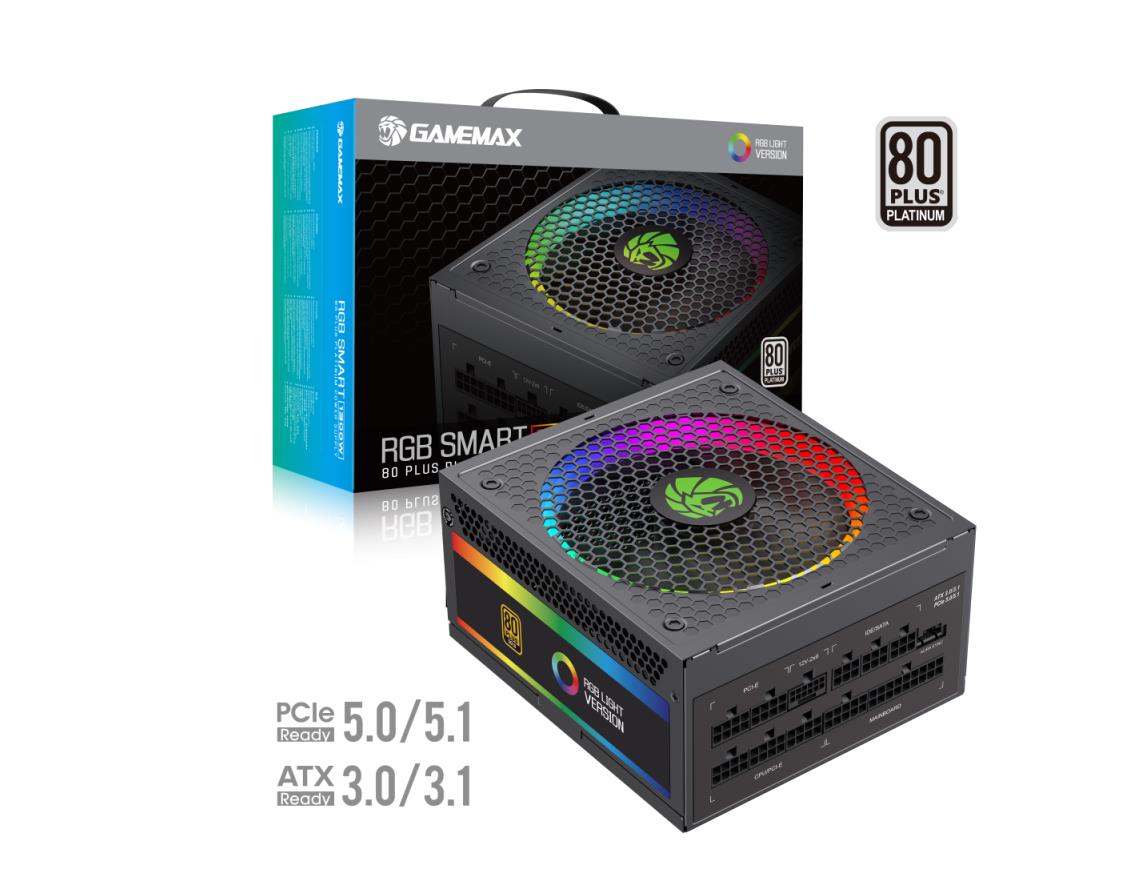
RGB PRO 1300P 1300W 80+ Platinum ATX3.1 Power Supply with Adaptive Fan & ARGB SYNC
• 80 Plus Platinum Efficiency: Delivers 92%+ efficiency under typical loads, cutting power use and noise for dependable performance.
• ATX3.1 & PCIe5.1 Support: Native 12V-2x6 connector ensures seamless power to RTX 40/50 GPUs, optimizing delivery and reducing loss.
• Adaptive Fan Control: 14CM fan auto-adjusts speed based on load, balancing energy efficiency with quiet operation.
• High-Quality Components: Japanese 105°C and solid capacitors guarantee durability, stability, and reliability for intensive tasks.
• Customizable RGB Lighting: 25 lighting modes with memory and ARGB SYNC support, enabling personalized and synchronized visual effects.

