
In the diverse world of mechanical keyboards, size and functionality often go hand in hand. Enthusiasts and casual users seek the perfect balance between compactness and practicality, and the 75% keyboard has emerged as a popular choice for its space - saving design without sacrificing too many essential keys.
A common question about this form factor is: how many keys does a 75% keyboard typically have?
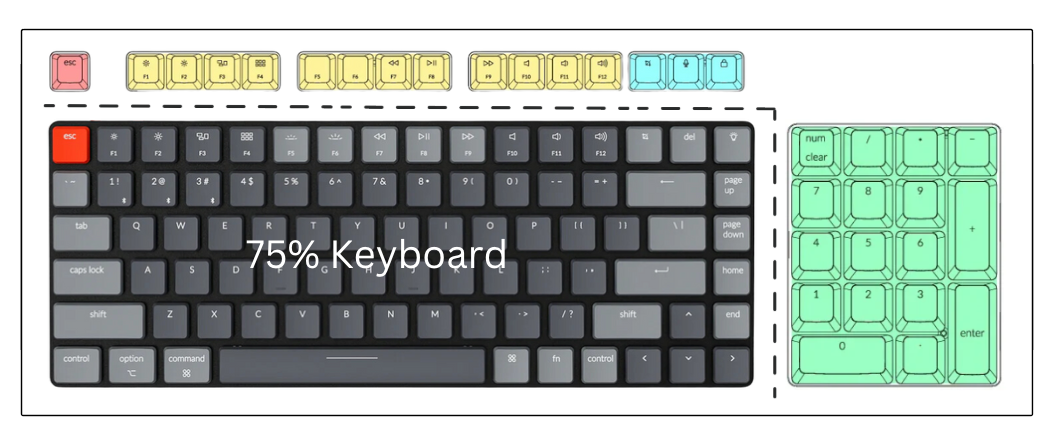
The answer, in most cases, is around 81 to 84 keys. This number positions it neatly between the more spacious 80% keyboards (usually 87 - 90 keys) and the more compact 60% keyboards (61 keys). The difference lies in the strategic selection of retained and omitted keys to achieve this middle - ground size.
What sets the 75% keyboard apart is its strategic of keys. Unlike full - size keyboards with 104 - 108 keys (including a dedicated numpad, function row, and numerous navigation keys), the 75% version reduces bulk. It eliminates the numpad, a feature many find unnecessary for daily tasks like document typing, web browsing, or coding. However, it retains the function row (F1 - F12), crucial for quick access to shortcuts in operating systems and software.
Another notable feature is the integration of navigation keys (Arrow keys, Home, End, Page Up, Page Down) within the main alphanumeric layout. Instead of a separate block, these keys are compactly placed on the right - hand side, often sharing space with other keys via a "layer" system. By holding a designated modifier key (like Fn), users can access these navigation functions without a larger footprint.
The 75% form factor also typically includes essential modifier keys such as Shift, Ctrl, Alt, and the Windows/Command key. This ensures standard keyboard shortcuts remain functional, making it a versatile option for those wanting to save desk space while efficiently performing common tasks.
The 75% keyboard, with its 81 to 84 keys, strikes an impressive balance between size and functionality. It caters to users valuing a clutter - free desk setup without compromising on executing essential commands and seamless navigation. Whether you're a programmer, writer, or casual computer user, this form factor offers a compelling blend of compactness and practicality.

