
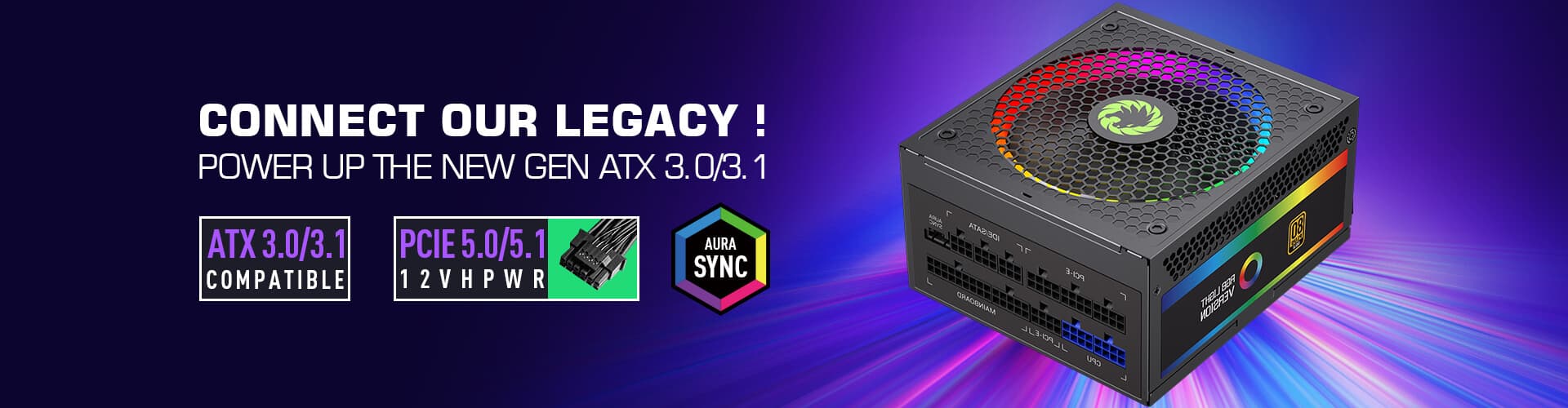
In the computer hardware ecosystem, the power supply acts as the "electrical heart," directly influencing system stability, hardware lifespan, and energy costs. With the continuous increase in GPU and CPU power consumption (e.g., the RTX 4090 peaks at 450W), choosing a power supply is no longer just about matching wattage—it involves a comprehensive evaluation of technical architecture, safety redundancy, and long-term usage costs. This article reveals the essential differences between high-end and entry-level power supplies from three dimensions: technical principles, practical experience, and purchasing strategies.
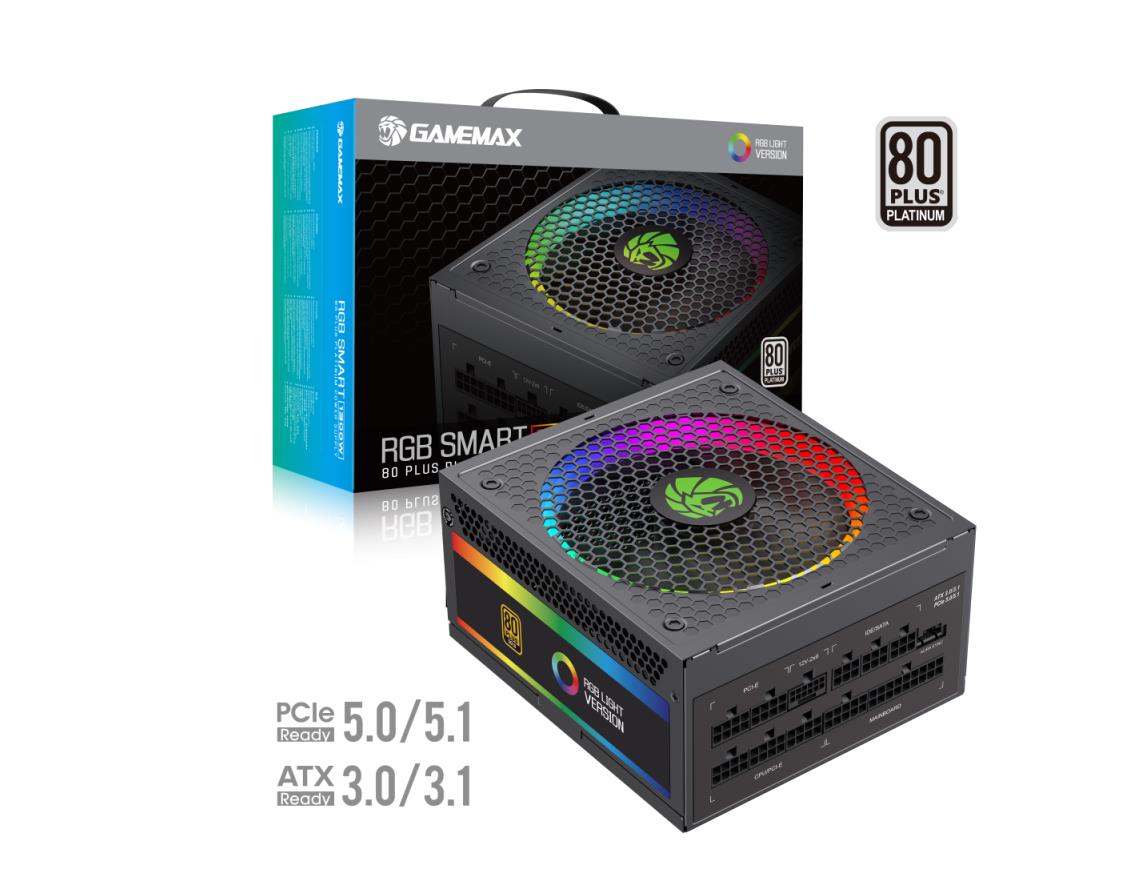
Certification System
High-end power supplies typically carry 80 PLUS Gold/Platinum/Titanium certifications, achieving over 90% efficiency under typical loads (e.g., the ASUS ROG Thor 3rd Gen Titanium certification offers 94% efficiency). In contrast, entry-level models usually have Bronze certification (82%) or no certification at all.
Real-World Energy Use
Taking an 850W power supply as an example, a Gold-certified model consumes approximately 150 fewer kilowatt-hours annually at 50% load compared to a Bronze-certified one. At ¥0.6 per kWh, this translates to a three-year savings of ¥270.
Technical Support
High-end power supplies adopt LLC resonant topology with gallium nitride (GaN) components, such as the Innosilicon 1000W DC-DC module with 98% efficiency. Entry-level models often use dual-transistor forward architectures, which have obvious efficiency limitations.
Circuit Design
High-end power supplies use 100% Japanese capacitors (e.g., Nichicon, Rubycon) with a lifespan of 100,000 hours, while entry-level models rely on Taiwanese or Chinese capacitors, reducing lifespan to 30,000–50,000 hours.
Protection Mechanisms
High-end products come standard with seven protection features (OVP, OCP, SCP, etc.), such as the TT Toughpower series, which monitors load status in real time and cuts power within 0.1ms of anomalies.
Dynamic Response
LLC resonant topology with digital control (e.g., Corsair AX1600i) ensures a transient response error of <50mV for 100A loads, while entry-level models may experience fluctuations exceeding 100mV, leading to hardware failures.
Fully Modular Design
High-end power supplies (e.g., GAMEMAX RGB PRO series) offer fully customizable cables for 按需连接 (on-demand cabling), reducing clutter inside the chassis. Entry-level models are mostly semi-modular or non-modular.
Cable Quality
High-end products use 16AWG silver-plated cables, reducing resistance by 30% for longer-distance power delivery, while entry-level models typically use 18AWG standard cables.
Interface Configuration
High-end power supplies feature PCIe 5.0 12VHPWR ports, supporting 600W per port, whereas entry-level models rely on PCIe 4.0 ports, requiring parallel connections for high-power GPUs.
Fan Technology
High-end power supplies use FDB fluid dynamic bearing fans, producing <20dB noise at <2000RPM, while entry-level models use sleeve bearings with noise often exceeding 30dB.
Thermal Control Strategy
Smart ECO mode in high-end models stops the fan under low load, while entry-level designs use fixed-speed fans, causing high-frequency noise.
Heat Dissipation Design
Full-bridge LLC topology with GaN components reduces heat generation by 30%, minimizing fan activation frequency.
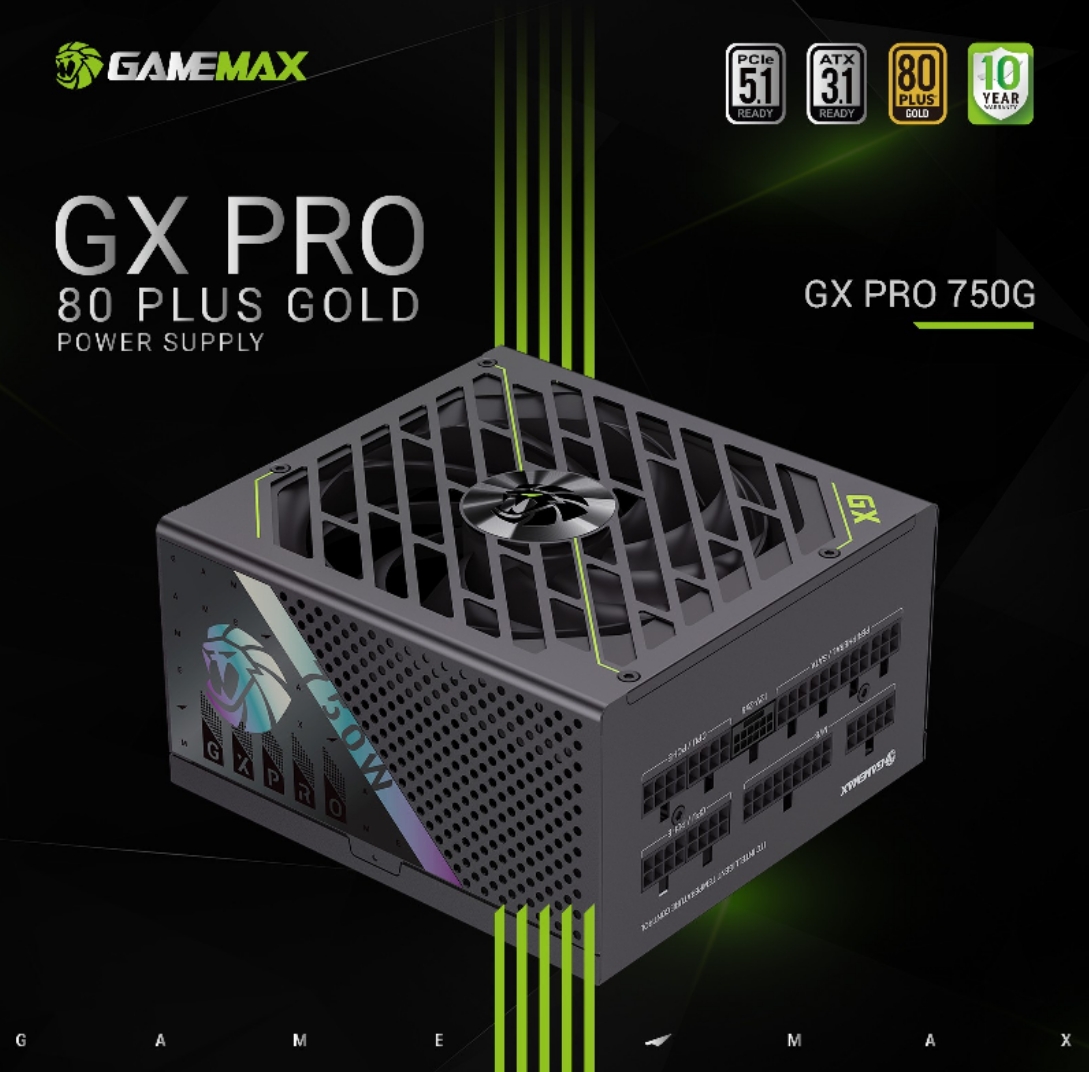
Gaming/Overclocking
Opt for 80 PLUS Gold or higher certification, fully modular design, and single 12V rail output (e.g., GAMEMAX RGB PRO series) to ensure stable instantaneous power for graphics cards.
Workstations/Rendering
Require Titanium certification and redundant design to support multi-CPU and multi-GPU configurations.
Daily Office Use
Bronze-certified, non-modular power supplies (costing under ¥300) suffice for basic needs.
Power Rating Inflation
Verify certifications on the 80 PLUS official website to avoid "peak power" marketing traps.
Cable Compatibility
Ensure native support for PCIe 5.0 interfaces to prevent voltage drop from adapters.
Noise Testing
Refer to professional reviews (e.g., JonnyGURU) and choose models with <25dB noise under load.
| Dimension | High-End Power Supply (¥1,500 Class) | Entry-Level Power Supply (¥500 Class) |
|---|---|---|
| Efficiency (50% Load) | 92% (Titanium) | 82% (Bronze) |
| Annual Electricity Save | ~¥180 | Baseline |
| Warranty Period | 10 Years | 3 Years |
| Hardware Failure Rate | <0.5%/Year | 2–3%/Year |
| Second-Hand Resale Value | 60% (After 5 Years) | 10% (After 3 Years) |
GaN Popularization
Modules achieving 98% efficiency will reduce power supply size by 40%.
Smart Grid Integration
Support for VRM voltage regulation to dynamically match CPU/GPU loads.
Eco-Friendly Materials
Recyclable casings and lead-free soldering comply with EU RoHS standards.
Choosing a power supply is akin to selecting a car engine—it impacts not only performance but also the overall system’s reliability and long-term costs. For users seeking 极致体验 (ultimate performance), high-end power supplies with LLC topology, modular design, and Titanium certification are indispensable. Budget-conscious users can rely on entry-level models for basic functionality but must compromise on stability and expandability. Based on actual usage scenarios and budgets, prioritize mid-to-high-end models from reputable brands to balance performance and cost optimally.

