
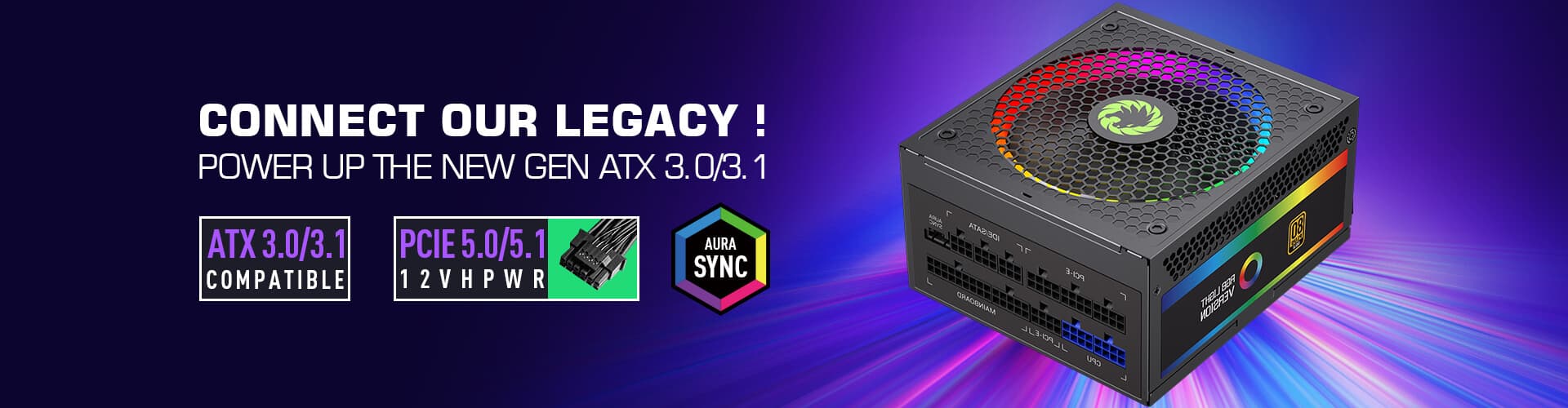
The evolution of ATX power connectors from 20-pin to 24-pin configurations stands as a pivotal moment in PC hardware history, reflecting both technological advancements and industry adaptation. Introduced in 1995 by Intel, the ATX (Advanced Technology Extended) standard revolutionized power supply design for desktop computers. However, as hardware demands grew, the 20-pin connector—a hallmark of early ATX versions—proved insufficient. This article explores the technical innovations behind the transition to 24-pin connectors and their far-reaching impact on the PC ecosystem.

The 20-pin connector, prevalent in ATX 1.x standards, provided voltages for core components like the CPU, RAM, and peripherals. However, by the early 2000s, emerging technologies—such as PCI Express (PCIe) graphics cards and dual-core CPUs—strained its capabilities. The 24-pin connector, first introduced in ATX 2.0 (2003) , addressed these challenges through three key advancements:
Enhanced Power Delivery:
The 24-pin design added four new pins, expanding support for +3.3V, +5V, and +12V rails. This allowed for higher current output, particularly critical for PCIe graphics cards, which required up to 75W of power through the motherboard slot . For instance, the 24-pin connector separated the +12V rail into two dedicated lines: one for the CPU (via the 4-pin EPS connector) and another for the motherboard and PCIe devices . This dual-rail system improved stability and reduced voltage fluctuations during peak loads.
Improved Efficiency and Safety:
The 24-pin connector incorporated better grounding and anti-surge protection. By distributing power across more pins, it minimized resistance and heat buildup—a common issue with 20-pin connectors under heavy loads . Additionally, the standardized pinout (e.g., green PS-ON for power control) streamlined compatibility and reduced risks of improper installation .
Future-Proofing for High-End Components:
As CPUs and GPUs became more power-hungry, the 24-pin connector enabled higher wattage supplies. For example, ATX 2.2 (2006) introduced stricter efficiency standards (e.g., 80 Plus certification), which aligned with the 24-pin’s ability to handle increased power demands while minimizing energy loss .
The shift to 24-pin connectors reshaped the PC industry in three significant ways:
Standardization and Compatibility:
While the 24-pin connector was backward-compatible with 20-pin motherboards via adapters, its adoption became mandatory for new systems. This forced motherboard manufacturers like ASUS and MSI to redesign their layouts to accommodate the larger connector, ensuring compliance with Intel’s ATX 2.0+ standards . Over time, 24-pin became the de facto standard, simplifying component integration and reducing design complexity.
Market Dynamics and Consumer Behavior:
The 24-pin transition accelerated the 淘汰 of legacy 20-pin power supplies. By 2005, most mid-to-high-end PSUs featured 24-pin connectors, driving demand for higher-wattage units (350W+). This trend coincided with the rise of gaming PCs and enthusiast builds, where stable power delivery was critical . However, budget systems often retained 20-pin connectors until the mid-2000s, highlighting a gradual market shift.
Long-Term Efficiency and Environmental Goals:
The 24-pin connector’s design laid the groundwork for future efficiency initiatives. For example, ATX 12VO (2020), a modern variant focusing solely on 12V output, built on the 24-pin’s power distribution principles to reduce energy waste . Similarly, 80 Plus-certified PSUs, which prioritize high conversion efficiency, leveraged the 24-pin’s robust architecture to meet stricter standards .
Despite its benefits, the 24-pin transition faced hurdles:
Legacy Systems: Users of older 20-pin PSUs often resorted to adapters, risking instability or overheating if the PSU’s power capacity was insufficient . For instance, using a 20-pin PSU with a 24-pin motherboard could overload the +12V rail, leading to system crashes or hardware damage .
Manufacturing Costs: Redesigning motherboards and PSUs for 24-pin connectors increased R&D expenses. However, economies of scale eventually reduced costs, making 24-pin components affordable for mainstream markets .
User Education: Many consumers initially misunderstood the importance of the 24-pin connector, leading to mismatched purchases. Forums and tech communities became vital resources for troubleshooting compatibility issues .
The 24-pin connector’s legacy endures in modern PC designs. While newer standards like ATX 3.0 (2022) introduce 12VHPWR connectors for high-end GPUs , the 24-pin remains essential for motherboard power delivery. Its emphasis on modularity and scalability also influenced the development of semi-modular PSUs, which optimize cable management while retaining compatibility .
Looking ahead, the 24-pin connector’s adaptability ensures its relevance in hybrid systems, such as those combining traditional components with AI accelerators or high-speed storage. As the PC industry evolves, the 24-pin serves as a testament to how incremental engineering improvements can drive foundational change.
The transition from 20-pin to 24-pin ATX connectors was more than a technical upgrade—it was a response to the PC industry’s need for scalability, efficiency, and reliability. By addressing power demands, standardizing designs, and enabling future innovations, the 24-pin connector solidified its place as a cornerstone of modern PC architecture. Its legacy underscores the importance of forward-thinking engineering in sustaining technological progress.
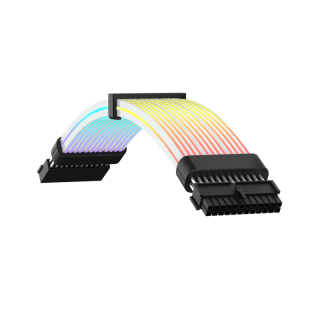
PSU extension cable, ARGB light. Description: MB 24PIN. Package: 40PCS/CTN.

