

In the world of ITX (small form factor) PC building, space is at a premium. Every component must be carefully selected to fit within the compact confines of the 机箱 (chassis), and the CPU cooler is no exception. A low profile CPU cooler is often the go-to choice for ITX builds, but with so many options on the market, it's easy to make a wrong decision that could lead to overheating, compatibility issues, or suboptimal performance. In this guide, we'll take you through everything you need to know to pick the right low profile CPU cooler, from understanding key dimensions to evaluating performance metrics, ensuring you avoid common pitfalls.

A low profile CPU cooler, as the name suggests, is designed to have a relatively short height compared to traditional tower-style coolers. These coolers are typically used in small form factor systems, HTPCs (home theater personal computers), and other compact builds where vertical space is limited. They come in two main types: air coolers and all-in-one (AIO) liquid coolers. While AIOs can offer better cooling performance in some cases, air coolers are often more budget-friendly and easier to install, especially for those new to PC building.
Throughout this guide, we'll be focusing on the key term "low profile CPU cooler" to help improve the article's search engine visibility. It's important to note that when searching for these coolers, you might also come across terms like "low height CPU cooler" or "slim CPU cooler," but "low profile CPU cooler" is the most commonly used and searched term in the industry.
The first and most crucial aspect of choosing a low profile CPU cooler is ensuring it fits within your ITX case. Here are the key dimensions you need to pay attention to:
This is the vertical height of the cooler from the baseplate (which sits on the CPU) to the top of the cooler. ITX cases typically have strict height restrictions for CPU coolers, often ranging from 40mm to 70mm. For example, the popular NR200P Mini-ITX case has a maximum CPU cooler height limit of 58mm, while the Dan A4-SFX v4 allows for up to 72mm. It's essential to check your case's specifications first to determine the maximum allowable height for the cooler. When searching for a low profile CPU cooler, make sure to filter results by height to ensure compatibility.
The baseplate of the cooler should be compatible with your CPU socket. For Intel sockets like LGA 1700, 1200, and 115x, and AMD sockets like AM5 and AM4, the baseplate should have the correct mounting holes. Additionally, the width and length of the cooler's fin array are important to ensure there's enough space around the CPU socket, especially if you have tall memory modules or a large VRM (voltage regulator module) heatsink. Some low profile coolers have a wider fin design that might interfere with adjacent components, so it's important to check the product dimensions and user reviews for any compatibility issues.
Most low profile air coolers come with a 92mm or 80mm fan. The size of the fan affects both cooling performance and noise levels. A larger fan (like 92mm) can move more air at lower speeds, resulting in quieter operation, but it might require more vertical space. Also, make sure there's enough clearance between the fan and the case roof or other components. Some cases have a recessed area for the cooler fan, while others might have limited space, so checking the fan's height and the available clearance is essential.

While size is crucial for fit, performance is equally important to ensure your CPU stays within safe temperature limits, especially during heavy loads like gaming or video editing.
The primary measure of a cooler's performance is its ability to dissipate heat from the CPU. This is typically measured in terms of thermal resistance (R-value), where a lower R-value indicates better heat dissipation. However, not all manufacturers provide R-values, so you can rely on independent reviews and benchmark tests. Look for how the cooler performs with different CPU types, especially high-power processors like the Intel Core i7 or AMD Ryzen 7. A good low profile CPU cooler should be able to keep a mid-range CPU under 80°C during full load in an ITX case, which tends to have less airflow compared to larger cases.
In a compact ITX build, noise can be more noticeable since the case is often closer to the user. Cooler noise is measured in decibels (dB), and a quieter cooler will provide a more pleasant computing experience. Look for coolers with a noise level of 30dB or lower under normal load. Some coolers come with PWM (pulse width modulation) fans that adjust their speed based on the CPU temperature, allowing for quieter operation during light tasks and higher speeds when more cooling is needed.
Air coolers with heat pipes are more efficient at transferring heat from the CPU to the fins. The number and diameter of the heat pipes matter. A cooler with 2 or 3 heat pipes (each around 6mm in diameter) is typical for low profile designs. Heat pipes that are directly in contact with the CPU (direct touch design) can sometimes offer better heat transfer, but a solid copper baseplate with heat pipes embedded can also be effective.
Installing a low profile CPU cooler in an ITX case can be more challenging due to the limited space, so ease of installation is an important factor.
Check if the cooler comes with all the necessary mounting hardware for your CPU socket. Some budget coolers might lack support for the latest sockets, so if you're using a new Intel or AMD processor, make sure the cooler is compatible. Also, look for mounting systems that are easy to install, especially in a tight space. Some coolers use a simple bracket system, while others might require removing the motherboard to install the backplate, which can be a hassle in an ITX case.
As mentioned earlier, the width of the cooler's fin array and the position of the fan can affect memory and VRM clearance. Tall DDR4 or DDR5 memory modules (especially those with heat spreaders or RGB lighting) might come into contact with the cooler's fan or fins. Similarly, large VRM heatsinks on the motherboard can sometimes block the cooler's installation. It's a good idea to check user reviews or manufacturer specifications for any reported compatibility issues with popular motherboards and memory kits.
To help you get started, here are some highly regarded low profile CPU coolers on the market, categorized by performance and price:

Gamma 300 CPU air cooler provides excellent performance featuring a 120mm big bowl fan for higher air pressure, and unique top-down Accelerated Cooling design to dissipate heat for the CPU, memory, and the motherboard
• The Gamma300 is for enthusiasts and gamers to push their systems to the limit
• Exceptional cooling performance is a must to keep it running stable and at max speeds
• The Gamma 300 is also stylishly design to match the precision engineered components in your build
• It even comes with a rainbow ARGB fans and controller for you to change the your lighting without limitations, and it apply with AURA 3pin header for sync
• Gamm300 Rainbow has 5pcs Direct Contact Heatpipes to provide the best in thermal performance.A base engineered to minimize CPU contact gaps provides excellent heat conduction.
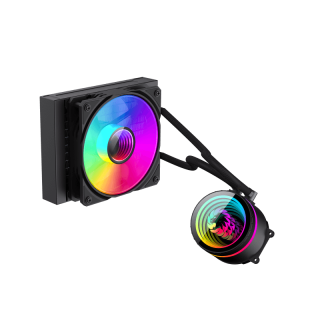
Gamemax ICEBURG 120 Infinity, All in One Liquid Cooler,TDP180W!
• SYNC Rainbow addressable LED light via motherboard or HUB controller
• AURA ready
• Water Cooling 120 system
• Support Intel LGA
• LGA1120/1150/1151/1155/1156/1366/1700/1851/2011-V3 AMD AM2/AM3/AM4/FM1/FM2
While it's important to fit the cooler in your case, don't choose a cooler that's too small and can't handle your CPU's heat output. A poorly performing cooler can lead to thermal throttling, where the CPU reduces its speed to avoid overheating, resulting in reduced performance.
If you plan to upgrade your CPU in the future, make sure the cooler is compatible with the new socket. Some low profile coolers have limited socket support, so future-proofing your purchase is worth considering.
Manufacturer specifications can be misleading, and real-world performance can vary. Reading user reviews on e-commerce sites and watching independent benchmark videos on YouTube can give you a better idea of how the cooler performs in actual ITX builds.
Choosing the right low profile CPU cooler for your ITX build requires a careful balance of size, performance, compatibility, and price. By following the guidelines in this guide, you can avoid common pitfalls and select a cooler that not only fits perfectly in your compact case but also keeps your CPU running cool and quiet. Remember to always check your case's specifications, read reviews, and consider your CPU's heat output when making your decision. With the right low profile CPU cooler, you can build a powerful and efficient ITX PC that meets all your computing needs.

