
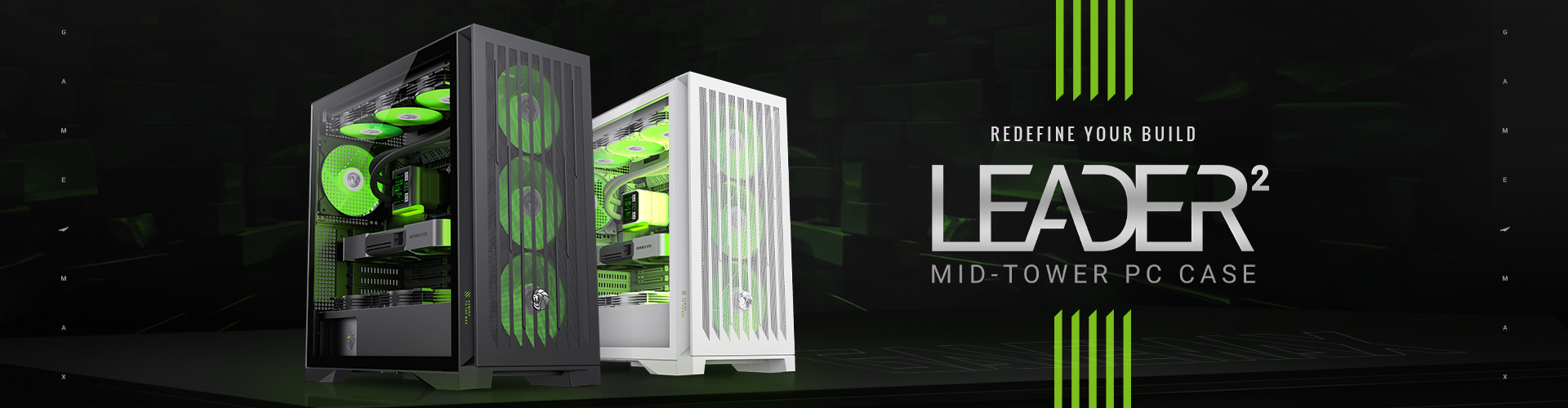
As tempered glass PC cases become the focal point of the desktop, their daily maintenance and ease of use have emerged as crucial factors influencing the overall experience. From fingerprint removal to installation methods, and from dustproof design to cable management, every detail reflects the human-centric design philosophy of the product. This article, informed by practical test data and user feedback, delves deep into the core pain points and solutions of tempered glass cases across four key scenarios: cleaning and maintenance, installation convenience, dustproof strategies, and cable management experience—guiding you to create a consistently sleek and user-friendly PC setup.

The issue of fingerprint and dust adhesion on tempered glass panels essentially hinges on surface coating technology:
Uncoated Ordinary Glass: Found in some budget models, this type of glass shows prominent fingerprint marks (clear ridges are visible after touching) and has a high dust attraction rate, requiring cleaning 1-2 times a week. When cleaning, it is recommended to use a microfiber cloth with deionized water, avoiding alcohol (which may corrode the glass edge sealant).
Anti-Fingerprint (AF) Coating: Standard in mid-to-high-end cases, such as the NZXT H710i. Its glass panel is coated with a 5μm-thick AF layer via vacuum sputtering. This reduces fingerprint residue by 60%, allowing for easy removal of water and oil stains, and extending the cleaning interval to once every 2-3 weeks.
Nano-Ceramic Coating: An advanced technology adopted by high-end models like the Lian Li O11 Dynamic Mini. It increases the hardness to 9H (compared to 6H for ordinary glass), triples scratch resistance, and features self-cleaning properties (dust naturally falls off with airflow). Practical tests show that the monthly cleaning requirement drops to just once.
Recommended Combinations: Microfiber cleaning cloths (e.g., 3M Scotch-Brite) paired with specialized glass cleaners (alcohol-free, such as Windex for computer screens) effectively remove fingerprint grease without damaging the coating.
Taboo Practices: Avoid using paper towels or regular towels (wood fibers can scratch the surface), alcohol wipes (which can damage the AF coating), and high-pressure water guns (risk of water seeping into the case). A user's practical test showed that using alcohol for cleaning reduced the glass surface gloss by 20% within three months.
Representative Product: The Cooler Master MasterCase H500 uses four M3 stainless steel screws to secure the side glass, with a load-bearing capacity of 5kg (suitable for 3mm-thick full-tower glass panels).
Advantages and Disadvantages: While highly stable (resistant to dislodging during bumpy transportation), it requires a Phillips screwdriver for installation. An error of over 0.5mm in screw hole alignment may cause uneven stress on the glass, leading to breakage. It is advisable to use a torque screwdriver (recommended torque: 2-3N·m) to prevent over-tightening.
Representative Product: The GAMEMAX Infinity Pro embeds six sets of N52 neodymium magnets (8N 吸力 per magnet) along the glass edge, enabling one-handed quick disassembly. Practical tests show that the installation time is 80% shorter than the screw-based method.
Stability Testing: When the case is vertically inverted (glass facing down), the critical angle for magnetic glass detachment is 65° (compared to 90° for screw fixing). Thus, it is recommended to use the original protective bag during transportation.
Large Glass Adaptation: For extra-large glass panels exceeding 300mm×500mm (such as the front panels of three-sided glass cases), some brands (e.g., Phanteks) adopt a dual-fixation approach combining magnetic and hidden buckle mechanisms, balancing convenience and security.
Seal Strip Configuration: High-quality cases, like the Huntkey GX660T, apply a 3mm-thick EPDM rubber strip at the contact area between the glass and metal frame, reducing dust ingress by 70%. In an open glass case without such a seal, the internal dust accumulation after one month was three times that of a metal case in the same environment.
Dust Filter Layout:
Bottom Dust Filters: Should cover all air intakes. Magnetic or drawer-style designs (e.g., SAMA PingTouGe M1) are recommended, allowing for 3-second extraction without removing the glass panel.
Top Dust Filters: For liquid cooling users, detachable filters (e.g., Corsair 4000D Airflow) are advisable to prevent dust from clogging radiator fins and affecting cooling efficiency.
Daily Maintenance: Use a handheld vacuum cleaner (low-power setting) to remove surface dust weekly.
Deep Cleaning: Rinse the dust filters with water monthly (nylon filters can be washed, while metal filters are recommended to use a neutral detergent), and reinstall after drying. Practical tests show that regular cleaning reduces internal dust accumulation by 40% and decreases hardware failure rates by 25%.
Ideal Standard: The rear cable management space should be ≥20mm (e.g., the Xigmatek Kaiyuan K1 offers a 28mm rear cable chamber) to accommodate 24Pin motherboard cables and multiple graphics card power cables. In a case with only 15mm of space, forced cable management resulted in the glass panel failing to fit properly (gaps ≥1mm).
Layered Cable Management Design: High-end cases like the Lian Li O11 Dynamic EVO feature two-layer cable channels on the backplate (upper layer for motherboard power, lower layer for hard drive cables). Paired with ten Velcro cable ties, they achieve a "zero visible cable" effect.
Cable Management Essentials:
Hidden Cable Holes: Oval holes with chamfered edges (e.g., the 12 cable holes on the NZXT H510i) prevent cable abrasion.
Modular Cable Holders: Plastic clips supporting vertical/horizontal routing (e.g., Cooler Master MB520) can secure cables with diameters of 6-12mm.
Power Supply Chamber Covers: These cover the power supply and hard drive areas (e.g., Aigo YOGO M2 Pro), concealing messy modular power cables.
Key Areas: In areas covered by glass panels (side/front), ensure cables are kept away from the visible surface. Route the 24Pin motherboard cable along the top of the case, and the 8Pin graphics card cable around the side of the power supply chamber to avoid cable bulges in front of the glass.
Advanced Tips: Use custom-length modular cables (±5cm tolerance) and color-matched braided sleeves (e.g., black sleeves for black cases) to further enhance tidiness.
Cleaning Friendliness: Prioritize models with AF coatings and magnetic dust filters; avoid low-end configurations with uncoated glass and fixed dust filters.
Installation Convenience: For small to medium-sized cases (ITX/MATX), choose magnetic quick-release designs; for full-tower cases, opt for a dual-fixation solution combining magnetic and screw mechanisms.
Cable Management Support: Exclude products with rear cable space <20mm or lacking pre-installed cable ties. Consider brand-specific custom modular cables (e.g., those for the GAMEMAX Infinity series).
Dustproof Sealing: Check product descriptions for "glass edge seal strips" and physically inspect the fit gap between the glass and frame (≤0.5mm is ideal).
The allure of tempered glass PC cases begins with their aesthetics but endures through usability. From anti-fingerprint coatings to magnetic quick-release mechanisms, and from dust filter designs to rear cable spaces, each detail embodies the "user-centric" design philosophy. Selecting a product that excels in cleaning, installation, dustproofing, and cable management not only keeps your PC looking pristine but also offers long-term convenience and comfort brought by humanized design.

