

Layout is critical to keyboard usability. ISO (International Organization for Standardization) and ANSI (American National Standards Institute) — the two main layout standards — differ significantly in design and use cases. Knowing these helps you pick the right keyboard.
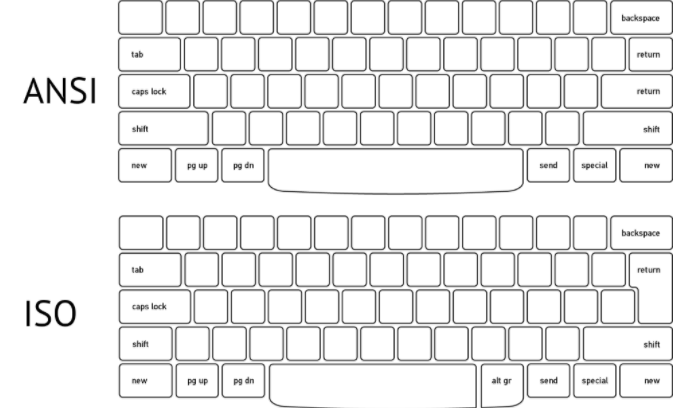
ANSI (U.S.-originated) dominates North America and global consumer tech. It’s optimized for English, with a compact, efficiency-focused design.
ISO (European roots) is common in Europe and parts of Asia. To support multilingual input (e.g., accented European languages, East Asian scripts), it retains extra functional space.
ANSI: A "rectangular" key (2 standard keys wide), keeping surrounding keys (e.g., right Shift) compact.
ISO: An "inverted L-shaped" key (1.5 keys wide, longer vertically), leaving more space for adjacent keys and aiding blind identification.
ANSI: A full-length left Shift (2 keys wide) with no extra keys, ensuring a smooth typing area for letters.
ISO: A split left Shift with a middle key (for "\"/"|" or language-specific symbols), boosting symbol input but slightly increasing misclick risk.
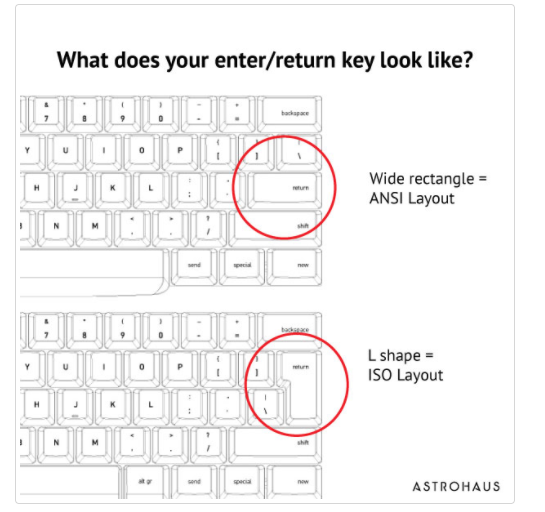
ANSI: Fewer keys, compact layout — ideal for saving desk space.
ISO: Slightly looser with larger key gaps — better for those with bigger hands.
English typing or American input methods (faster, shorter finger movement).
Touch typists (consistent key arrangement).
DIY enthusiasts (more keycap options, lower modification costs).
Multilingual users (extra keys simplify special character input).
Chinese input method users (convenient right Alt key placement).
Those with thicker fingers (looser spacing reduces misclicks).
Neither is "better" — choose based on needs. ANSI excels at compact English efficiency; ISO offers flexibility for multilingual use and larger hands.
Consider your language, typing style, and device compatibility (e.g., keycap fit) to find your ideal layout.

