The appeal of small form factor gaming builds has never been stronger. Modern ITX and Micro-ATX motherboards offer nearly all the features of their full-size counterparts, including PCIe 4.0 and 5.0 support, multiple M.2 slots, and robust VRM designs capable of driving high-end CPUs. Graphics cards have become more power-efficient while delivering frame rates that were unimaginable a generation ago. The result is that a well-planned compact build can deliver identical gaming performance to a full-tower system while occupying a fraction of the desk space and being far easier to transport.
The challenge lies in the case. Squeezing high-performance components into a compact chassis requires careful thermal management, creative layout design, and attention to details that larger cases can afford to ignore. A small form factor case must balance size constraints against the cooling demands of modern hardware, provide adequate cable routing in limited space, and make assembly possible without requiring hands the size of a child's. The best compact cases achieve this balance through intelligent vertical layouts, mesh ventilation panels, and modular component mounting systems.
Thermal design is the make-or-break factor for compact
gaming cases. Modern GPUs generate 250 watts or more of heat, and high-end CPUs can match or exceed that figure. In a small chassis, this heat concentrates quickly if the case cannot move air efficiently. Vertical airflow designs have emerged as the optimal solution for compact cases, drawing cool air from the bottom and exhausting hot air through the top. This orientation aligns with natural convection and ensures that the hottest components receive the coolest intake air. Mesh side and front panels further enhance this effect by eliminating the airflow restrictions of solid metal or glass.
Component compatibility requires more careful planning in small form factor builds. GPU length limits are the most obvious constraint, with many compact cases supporting cards between 300mm and 350mm. However, CPU cooler height is equally important. Tower
air coolers over 160mm tall will not fit in most mini-tower cases, which means builders must either choose low-profile coolers or embrace liquid cooling with 120mm or 240mm radiators. Power supply form factor is another consideration, as some compact cases require SFX units rather than standard ATX power supplies, though many modern designs accommodate full-size ATX PSUs to reduce build costs.
Cable management in compact cases demands patience and planning. With limited space behind the motherboard tray, every cable must be routed intentionally. Modular or semi-modular power supplies are practically mandatory, as unused cables consume precious space and obstruct airflow. Flat ribbon-style cables help compared to thick bundled harnesses, and custom cable lengths become worthwhile for builders who plan multiple compact systems. The best compact cases include cable routing channels, tie-down points, and strategically placed cutouts that simplify this process despite the spatial constraints.
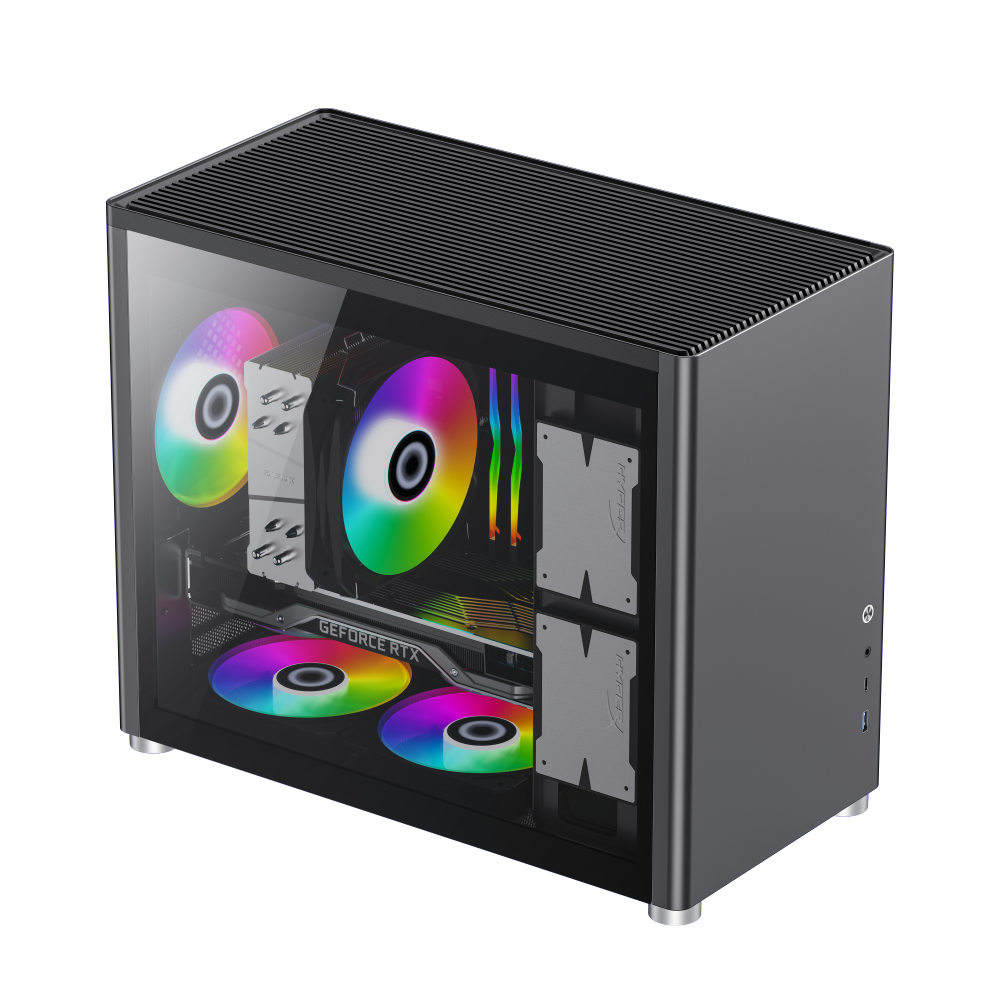
The Spark BK exemplifies how vertical airflow transforms compact case design. Its innovative layout draws cool air upward through the chassis, directly across the GPU and CPU before exhausting through the top panel. This natural convection-assisted path keeps components significantly cooler than traditional front-to-back airflow in confined spaces. The case supports Micro-ATX and Mini-ITX motherboards, accommodates GPUs up to 355mm long, and fits CPU coolers up to 168mm tall, making it compatible with most mainstream gaming hardware. The tempered glass side panels showcase your build from both sides, while the compact 401mm by 204mm footprint leaves ample desk space for peripherals and
monitors. Dual USB 3.2 ports including Type-C provide modern connectivity without requiring a bulky front panel.
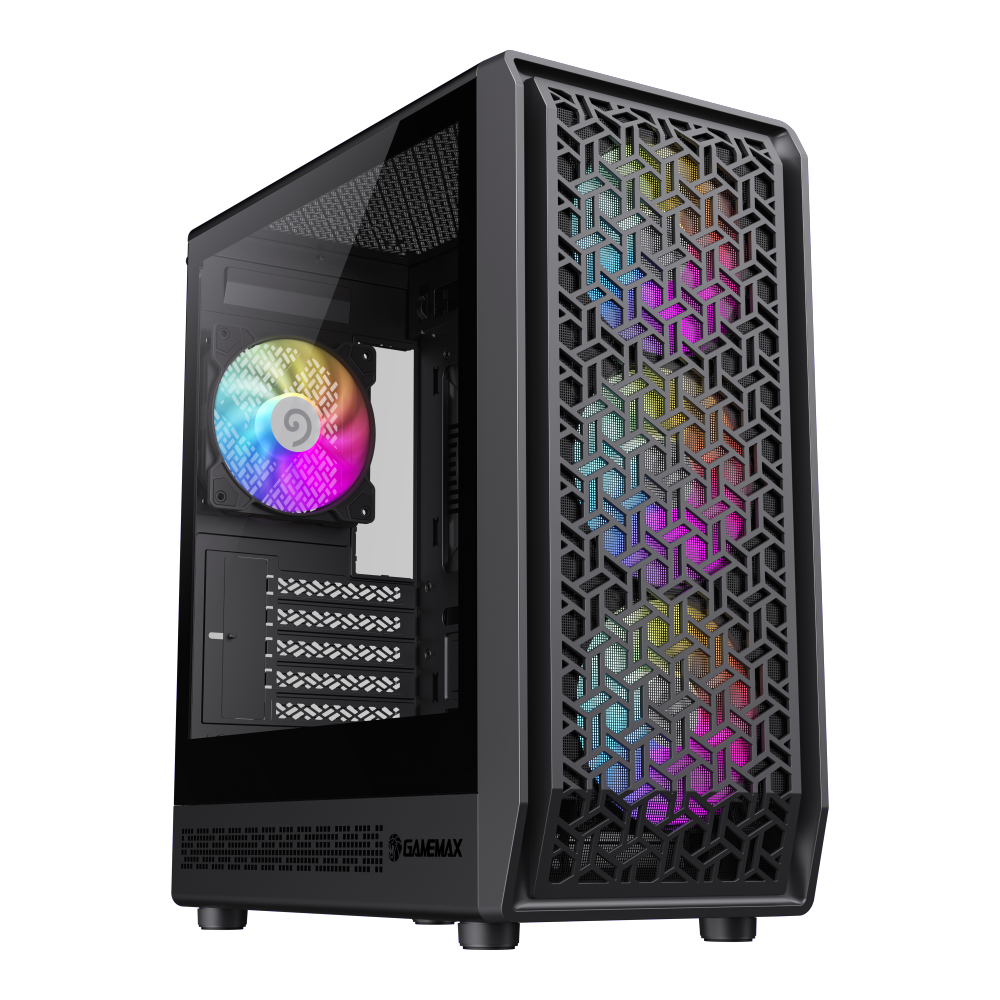
For builders who want compact dimensions without sacrificing advanced cooling features, the Forge COC brings patented Cooling and Overclocking Architecture to the mini-tower form factor. The COC system actively manages airflow to prevent heat buildup around critical components, while the tempered glass side panel provides a clear view of your hardware. Despite its compact size, the case supports 360mm radiators for liquid cooling, making it one of the few mini-tower options that can handle high-end AIO setups. The Forge COC accommodates M-ATX and ITX motherboards, supports GPUs up to 330mm, and includes bottom and top dust filters that keep your components clean. The tool-free tempered glass panel makes upgrades and maintenance simple, even in tight spaces.
Building in a small form factor case rewards careful planning with a system that delivers full gaming performance in a remarkably compact package. Start by verifying every component dimension against the case specifications, paying special attention to GPU length, CPU cooler height, and power supply form factor. Plan your cable routing before installing any components, and consider a modular power supply to minimize clutter. Choose cooling solutions that work with the case's airflow design rather than against it. With the right case and thoughtful component selection, your compact gaming build will deliver the performance you want with the footprint you need.
![Spark BK]()
GameMax Spark Carbon Black Micro Desktop Gaming Computer Case, With featured vertical airflow designed game case, along good for business PC station, which makes complex ino simple, blends in the home. • Vertical airflow channel, small size, high compatibility, basically suitable fo.
![Forge COC]()
Forge COC a gaming mATX PC case with lighting, 4 pre-installed ARGB fans, and a patented COC (Cooling and Overclocking Architecture) system that ensures optimal performance for gamers. • Flexible Storage - Supports up to 3x 3.5 HDDs and 5x 2.5 SSDs, providing versatile storage options.