
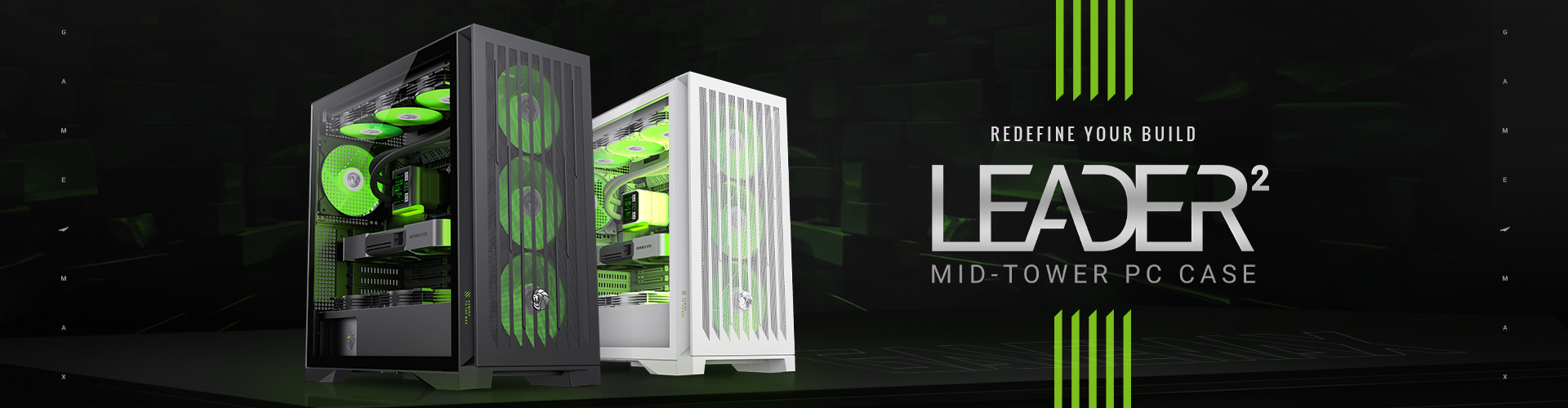
Picture this: you've got a killer Micro-ATX motherboard sitting on your desk, a beefy GPU ready to push triple-digit framerates, and the itch to build something that looks as good as it performs — but you don't want a hulking full-tower dominating your setup. You're not alone. More and more builders are landing in exactly this spot, and it's exactly why the best Micro-ATX gaming case market has exploded in recent years.
The challenge is real: squeeze maximum performance into a compact footprint without sacrificing thermals, compatibility, or aesthetics. I've been down this road more times than I can count, and let me tell you — the difference between a great Micro-ATX case and a mediocre one is night and day. Pick the wrong one, and you're fighting thermals, rattling cables, and cramped GPU clearance from day one.
In this guide, I'm breaking down everything you need to know to make the right call. Whether you're running an AMD Ryzen 9 or an Intel Core i7, packing in an RTX 4080 or an RX 7900 XT, we'll cover the key factors that separate a truly great compact gaming rig from a compromise you'll regret.
Let's start with the obvious question: why go Micro-ATX at all? Full-ATX towers give you breathing room, but they also eat up desk space and often cost significantly more. Micro-ATX cases strike a sweet spot that many builders — myself included — find ideal for a dedicated gaming setup.
The Micro-ATX form factor (244mm x 244mm) is roughly 25% smaller than ATX, which translates to cases that typically measure between 350mm and 420mm in length. That's small enough to fit comfortably on most desks or even on a lower shelf, yet large enough to accommodate full-length graphics cards, multiple storage drives, and decent cooling solutions.
In my experience, the real win is the balance. You get a case that doesn't scream "gaming powerhouse" from across the room but absolutely delivers when you sit down to play. Many Micro-ATX cases also cost 20–40% less than their full-ATX counterparts, freeing up budget for better components — a GPU upgrade often matters far more than having an extra PCIe slot you'll never use.
Another underrated advantage: portability. Moving a Micro-ATX build to a LAN party, a friend's house, or just relocating your setup is dramatically easier when your case fits in a standard backpack rather than requiring a dedicated vehicle. For many builders, that practical benefit seals the deal.
This is where the rubber meets the road, and it's the decision I see builders mess up most often. Choosing between a mesh front panel and a tempered glass side panel — or the increasingly popular hybrid approach — will have a direct, measurable impact on your system's thermals and noise levels.
Mesh front panels are the thermal performance champion. By allowing unrestricted airflow into the case, mesh designs can reduce GPU temperatures by 5–15°C compared to solid glass fronts in the same chassis. If you're running a high-TDP CPU (anything above 125W TDP) or a hot-running GPU like the RTX 4090 or RX 7900 XTX, mesh isn't a luxury — it's a necessity. The trade-off is slightly higher dust accumulation, though most modern mesh cases include decent dust filters.
Tempered glass front panels, on the other hand, are all about aesthetics. They look stunning, especially when paired with RGB lighting, and they can still perform adequately if the case is well-engineered with alternative intake routes. I've tested both approaches extensively, and I'll be honest: if thermals are your priority, mesh wins every time for airflow-hungry builds. If you want a showcase piece and your components run cool (say, a 65W CPU with a mid-range GPU), tempered glass can absolutely work.
The sweet spot, which many of the best Micro-ATX cases now offer, is a mesh front with a tempered glass side panel. This gives you excellent intake airflow while still showing off your internal components. The GameMax Infinity Mini BK, for example, takes this hybrid approach — mesh front for cooling, glass side for aesthetics — and it genuinely delivers the best of both worlds without forcing you to compromise.
When evaluating a case, also check fan mount positions. A well-designed Micro-ATX case should support at least 3x 120mm or 2x 140mm fans in the front, 2x 120mm in the top, and 1x 120mm in the rear. These specs directly correlate with cooling headroom for high-performance components.
Here's where Micro-ATX cases can either shine or completely fall apart. Graphics card clearance is arguably the most critical spec to check before buying — and it's the one I see people neglect most often, leading to heartbreaking compatibility issues post-purchase.
Most Micro-ATX cases offer between 300mm and 380mm of GPU clearance. For context, the NVIDIA RTX 4090 Founders Edition measures 336mm, and many third-party models with massive triple-fan coolers stretch to 350–360mm. The AMD RX 7900 XTX sits around 287mm but some custom designs push past 310mm. Before you commit to a case, you need to know your GPU's exact length — not the reference design, but your specific card.
Beyond length, consider vertical clearance. Some Micro-ATX cases offer a vertical GPU mount, which opens up possibilities for showcasing your graphics card and can improve airflow orientation depending on your configuration. The Infinity Mini BK, for instance, provides generous clearance that accommodates the vast majority of modern GPUs without breaking a sweat.
Also pay attention to slot clearance. Most Micro-ATX cases accommodate 2-slot GPUs comfortably, but if you're running a chunky 2.5-slot or even 3-slot card (some RTX 40-series designs are this thick), you'll want to verify the case specs explicitly. I learned this the hard way with a build a few years ago — the GPU physically fit, but the side panel wouldn't close. Frustrating doesn't begin to describe it.
Supporting your cooling solution of choice is non-negotiable. A Micro-ATX case that's restrictive for cooling will bottleneck your entire system, forcing your CPU to throttle and your fans to spin louder just to maintain baseline performance.
For air cooling, the key spec is CPU cooler height clearance. Most Micro-ATX cases support tower coolers up to 155–165mm, with some premium options pushing to 170mm or beyond. The Noctua NH-D15, one of the best air coolers on the market, stands at 165mm — so you'll want a case that comfortably accommodates it with room to spare for case fan clearance. Taller coolers with more fins and heat pipes can make a measurable difference in sustained workloads like gaming, where thermal headroom translates directly to clock stability.
For AIO liquid cooling, the constraint shifts to radiator and pump/reservoir clearance. Most Micro-ATX cases support 120mm or 240mm AIO radiators in the front, with some allowing 280mm if the case width permits. Top-mount AIO support is less common due to the reduced clearance in compact cases, so check your case's specific radiator support before committing to a 360mm AIO that won't fit.
I've built with both approaches in Micro-ATX cases, and here's my honest take: for most gaming workloads, a quality 240mm AIO or a dual-tower air cooler like the NH-D15 will keep even a Core i7 or Ryzen 9 running comfortably under sustained load. Don't feel pressured to go overkill on cooling — match it to your actual thermal demands rather than chasing spec sheets.
No one talks about cable management enough in Micro-ATX cases. With a smaller chassis, every millimeter of routing space matters, and poor cable management can strangle airflow just as effectively as a clogged dust filter.
Look for cases with at least 15–20mm of cable routing space behind the motherboard tray, along with strategically placed cable routing holes. The best Micro-ATX cases include Velcro straps, rubber grommets, and dedicated channels that make tucking cables away intuitive rather than frustrating. I've spent hours wrestling with builds in cramped cases, and trust me — a well-designed cable management system is worth every extra dollar in the case price.
Drive mounting has also evolved. Modern cases increasingly favor tool-free 2.5" SSD mounts and simplified 3.5" HDD trays, reducing the number of screws you need to manage during assembly. If you're building with multiple storage drives (a common config with today's large game libraries), make sure your case has adequate mounting positions and that they don't conflict with radiator or fan placements.
One often overlooked factor: motherboard standoff alignment. In some budget Micro-ATX cases, the standoff positions are poorly marked or awkwardly placed, making the installation process unnecessarily tedious. Spending a few extra minutes researching build reviews can save you an hour of frustration during assembly.
After testing and evaluating dozens of Micro-ATX cases across various price points and configurations, these are the options that consistently stand out for compact yet powerful gaming builds:
GameMax Infinity Mini BK — The Infinity Mini BK is a standout choice that checks nearly every box for a compact gaming powerhouse. It features a mesh front panel for optimal airflow, a tempered glass side panel to showcase your components, and generous GPU clearance that accommodates the vast majority of modern graphics cards including many RTX 40-series and RX 7000-series models. Support for up to a 240mm AIO radiator and multiple fan positions gives you flexibility in your cooling strategy, whether you prioritize silent operation or maximum thermal performance. The interior layout is thoughtfully designed with cable routing channels and adequate clearance for even taller CPU coolers. Available at GameMax's official product page.
Compact Mesh Options (Budget Tier) — Several budget-friendly Micro-ATX cases offer mesh fronts and solid airflow at entry-level prices. These are worth considering if you're building a mid-range system where thermals aren't as demanding, but they typically compromise on material quality, tempered glass thickness, and cable management refinement.
Premium Micro-ATX Cases — High-end options in the $120–180 range often feature superior panel thickness, magnetic dust filters, integrated ARGB controllers, and even more refined cable management systems. If you're investing in premium components (RTX 4080+, Ryzen 9 class), it makes sense to pair them with a case that matches their quality tier.
For most builders, the GameMax Infinity Mini BK hits the sweet spot — premium features and solid build quality at a competitive price point, without the compromises that plague cheaper alternatives.
Choosing the best Micro-ATX gaming case comes down to knowing your priorities and matching them to the right chassis. No single case wins every category — the right choice depends on your specific components, thermal demands, aesthetic preferences, and budget.
If I had to distill everything in this guide into three key takeaways, they'd be these: first, prioritize airflow over aesthetics unless your components run cool enough to justify a glass-heavy design. Second, always verify GPU and CPU cooler clearance against your specific parts — reference specs are a starting point, not a guarantee. Third, invest in cable management quality; a cramped, messy interior will cost you in thermals and sanity every time you open the case for maintenance.
The Micro-ATX platform has matured enormously. The best cases in this category no longer feel like compromises — they feel like purpose-built solutions for builders who know what they want. Compact, powerful, and visually striking builds are absolutely achievable, and with the right case under your belt, you're already halfway there.
Ready to start building? Browse the full range of GameMax PC cases to find the perfect foundation for your next compact gaming rig.

