
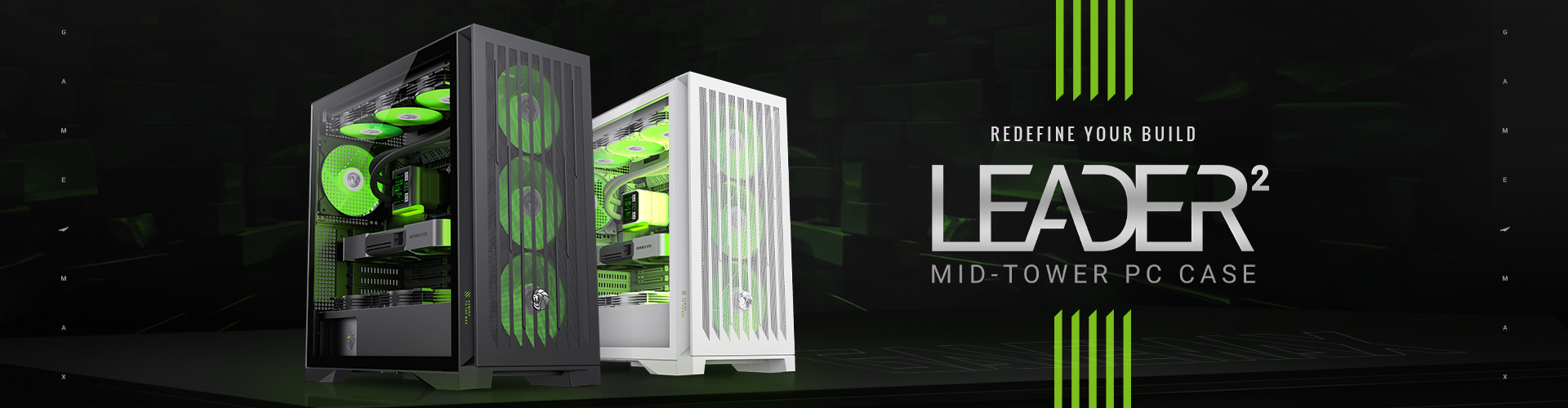
Super full tower PC cases represent the absolute largest chassis options available for extreme computer builds that require maximum space for components, cooling systems, and custom modifications. These cases exceed standard full tower dimensions significantly, providing room for extended motherboard formats, multiple radiator setups, extensive storage arrays, and the cable management infrastructure that complex builds demand. Understanding super full tower capabilities helps builders plan ambitious systems with confidence.
Height measurements for super full towers typically exceed 600mm, substantially taller than standard full tower cases that usually max out around 550mm. This additional height accommodates extended ATX motherboards, multiple 480mm radiator configurations, and the fan arrangements that extreme cooling systems require. The height advantage translates directly to build flexibility that smaller cases cannot match.
Depth dimensions provide the component clearance that oversized graphics cards and extended power supplies demand, with super full towers offering GPU clearance well beyond 400mm and PSU lengths exceeding 200mm. The depth also enables the cable routing channels and drive cage arrangements that complex builds need. Generous depth eliminates compatibility concerns that constrain smaller chassis.
Width measurements affect motherboard tray access and cable management space, with super full towers providing the working room that makes building easier. The width also determines radiator mounting options and the clearance for tall memory modules and CPU coolers. Extra width simplifies the building process while enabling configurations that narrower cases cannot accommodate.
Multi-radiator support defines super full tower cooling potential, with most models accommodating three or more large radiators simultaneously. Front-mounted 480mm radiators, top-mounted 420mm units, and side-mounted configurations create cooling capacity that handles the most demanding thermal loads. This radiator density supports extreme overclocking and workstation applications.
Fan mounting positions typically exceed fifteen locations in super full towers, enabling the airflow volumes that high-wattage systems generate. The combination of intake, exhaust, and internal fan positions creates positive pressure environments and directed airflow paths that optimize component temperatures. Fan capacity directly impacts thermal performance limits.
Custom loop compatibility extends to multiple GPU blocks, motherboard VRM cooling, and even RAM cooling configurations that require extensive tubing runs and reservoir mounting options. Super full towers provide the internal volume that complex custom loops need for clean routing and maintenance access. Custom water cooling enthusiasts benefit most from super tower dimensions.
Extended ATX and HPTX motherboard support appears in many super full towers, providing mounting options for workstation-class boards that standard cases cannot accept. These oversized motherboards offer additional PCIe slots, enhanced power delivery, and the expansion capabilities that professional applications require. Motherboard compatibility expands build possibilities significantly.
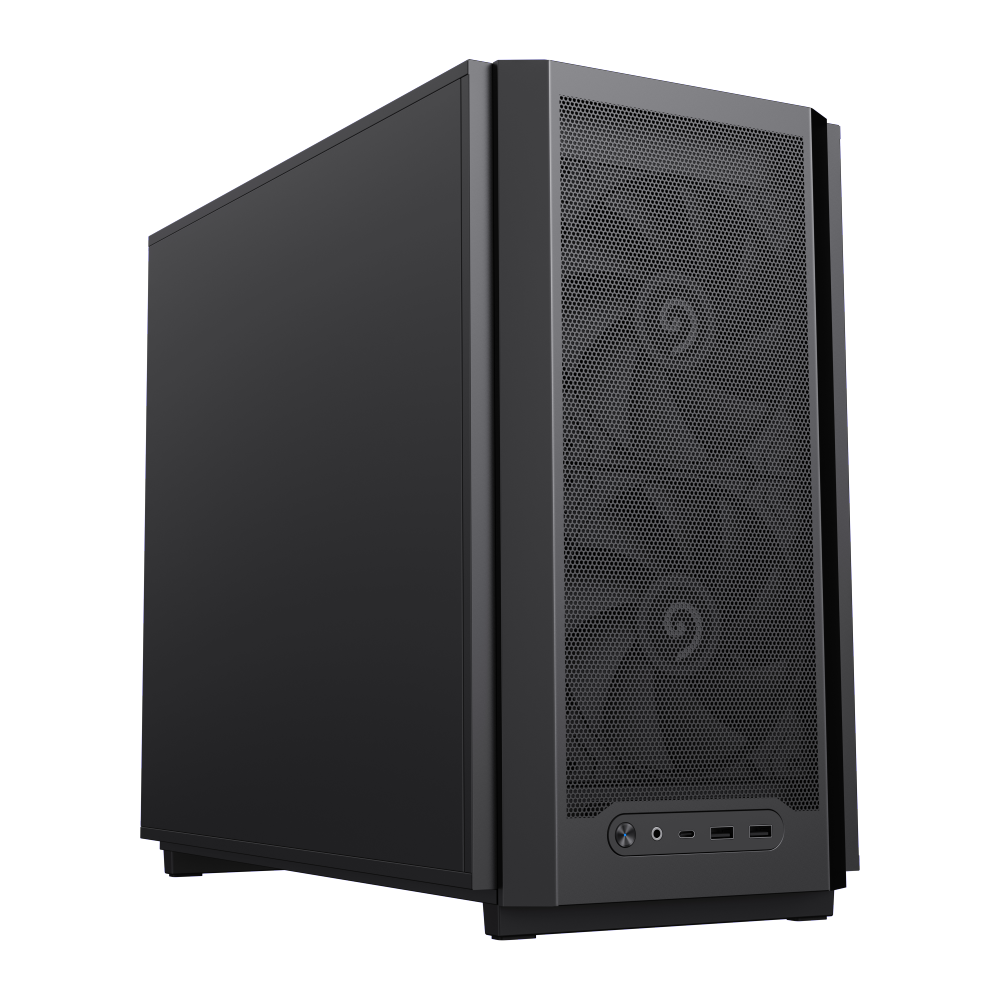
F36 Dark demonstrates the spacious interior design that super full tower builds demand. The generous dimensions accommodate the largest components while providing the airflow paths that extreme systems require for thermal management.
Multiple GPU configurations benefit from super full tower dimensions, with support for quad-GPU setups and the power supply capacity such configurations demand. The expansion slot count and spacing accommodate dual-slot graphics cards in multi-card arrangements without blocking adjacent slots. Graphics processing density reaches maximum potential in super tower space.
Storage capacity in super full towers often exceeds twenty drive mounting positions, accommodating extensive SSD and HDD arrays that data-intensive applications require. The combination of hot-swap bays, internal mounts, and dedicated SSD locations provides flexibility for storage architecture design. Storage density complements the processing power that super towers enable.
Material thickness in premium super full towers typically exceeds 1.0mm steel construction, providing the rigidity that large dimensions demand and the durability that substantial component weight requires. The structural integrity prevents the flex and resonance that thinner cases exhibit under heavy loads. Construction quality determines long-term reliability.
Panel materials include tempered glass, aluminum, and steel combinations that balance aesthetics against practical considerations like weight and acoustic performance. Glass panels showcase RGB lighting and component layouts while adding weight, while aluminum panels reduce mass without sacrificing strength. Material selection reflects builder priorities.
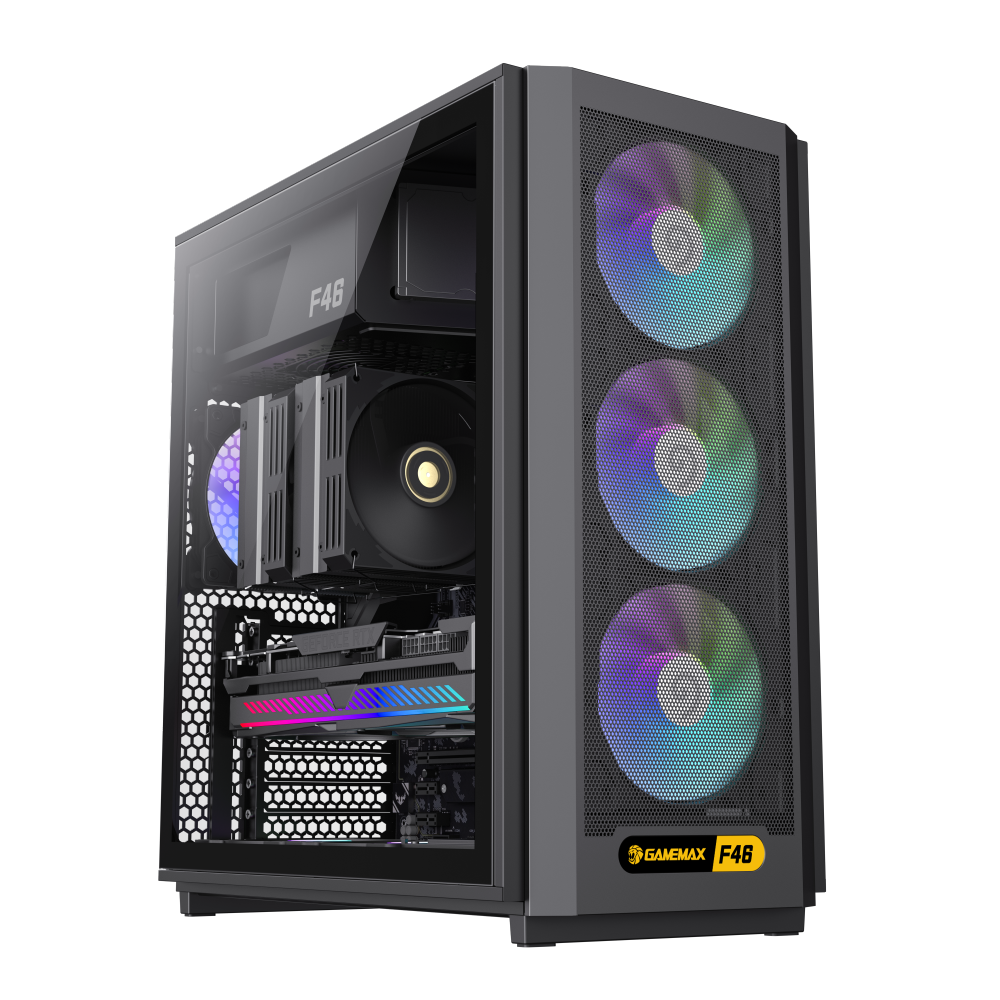
F46 BK illustrates the premium construction quality that characterizes top-tier super full tower cases. Robust build materials ensure that extreme builds remain stable and secure throughout years of demanding operation.
Cable routing depth in super full towers typically exceeds 30mm behind the motherboard tray, providing the space that complex systems with many cables require for clean routing. The cable management capacity prevents the bulging side panels and cramped routing that inadequate space creates. Generous cable room simplifies building and improves airflow.
Pass-through locations multiply in super full towers, with numerous rubber-grommeted openings that connect the main chamber to the cable management space. These access points enable logical cable routing that connects components efficiently without crossing airflow paths. Strategic pass-through positioning optimizes both aesthetics and function.
Velcro straps, cable combs, and dedicated routing channels appear in premium super full towers, providing the organization tools that complex systems need for professional appearance. Integrated cable management features reduce the aftermarket modifications that simpler cases require. Built-in organization aids streamline the building process.
Professional workstation builds benefit from super full tower capacity, with room for professional GPUs, storage arrays, and the cooling systems that sustained high loads demand. Render farms, simulation systems, and data processing machines all benefit from super tower dimensions. Professional applications justify the size investment.
Server-adjacent applications in home labs and small business environments utilize super full towers for virtualization hosts, storage servers, and development systems that require extensive hardware. The tower form factor fits office environments better than rack equipment while providing similar hardware density. Workstation cases bridge consumer and enterprise needs.
Desk space requirements for super full towers substantially exceed standard cases, with footprints that may not fit under standard desk surfaces or in typical computer furniture. The dimensions demand dedicated space planning that smaller cases do not require. Spatial planning should precede purchase decisions.
Transportation challenges accompany super full tower size, with weights often exceeding 15kg empty and substantially more when fully built. LAN party attendance and system relocation become significant undertakings with super tower equipment. Mobility considerations affect practical ownership experience.
Cost premiums for super full towers reflect the material quantities, engineering complexity, and limited production volumes that these specialized products involve. The investment delivers capability that standard cases cannot provide, but the value proposition depends on utilizing the features that justify the cost. Build complexity should match case capability.

