
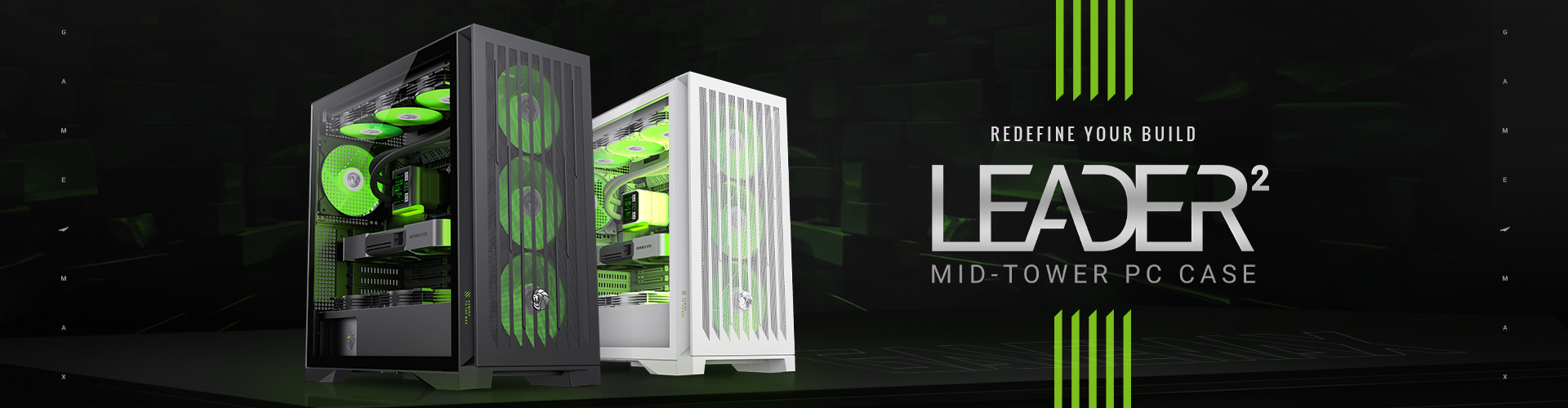
The NVIDIA GeForce RTX 4090 represents the current pinnacle of consumer graphics processing, demanding chassis dimensions that many cases cannot provide. Full tower cases offer the GPU clearance, airflow capacity, and power supply accommodation that 4090 builds require for optimal performance. Selecting the right full tower ensures that this flagship GPU operates within thermal and electrical specifications while enabling future expansion.
RTX 4090 cards range from 330mm to over 360mm depending on manufacturer and cooling solution, requiring cases with GPU clearance specifications that exceed typical mid-tower capabilities. Full tower cases routinely provide 380mm or greater clearance, eliminating the compatibility uncertainty that smaller cases create. GPU length verification should be the first specification checked.
Cable clearance adds to the GPU length requirement, as power connectors at the card's end need additional space for bending without stressing the connector. The 12VHPWR connector used by 4090s requires careful cable routing that additional case depth enables. Cable management space prevents connector damage.
Sag prevention becomes critical with 4090 weight, as these cards often exceed 2kg and create substantial leverage on PCIe slots. Full tower cases frequently include GPU support brackets or enable third-party solutions that prevent the PCB damage that prolonged sag causes. Support mechanisms protect component investment.
Airflow volume requirements for 4090 systems exceed typical gaming builds, with the GPU alone generating 450W under load plus CPU and other component heat. Full tower cases provide the fan mounting positions and airflow paths that manage these thermal loads without excessive noise. Thermal headroom determines sustained performance.
Intake fan capacity in full towers typically includes multiple 140mm or 120mm mounting positions at the front, with mesh or ventilated front panels that allow unrestricted airflow. The intake volume directly affects GPU temperatures by providing fresh air to the card's fans. Front panel design significantly impacts thermal performance.
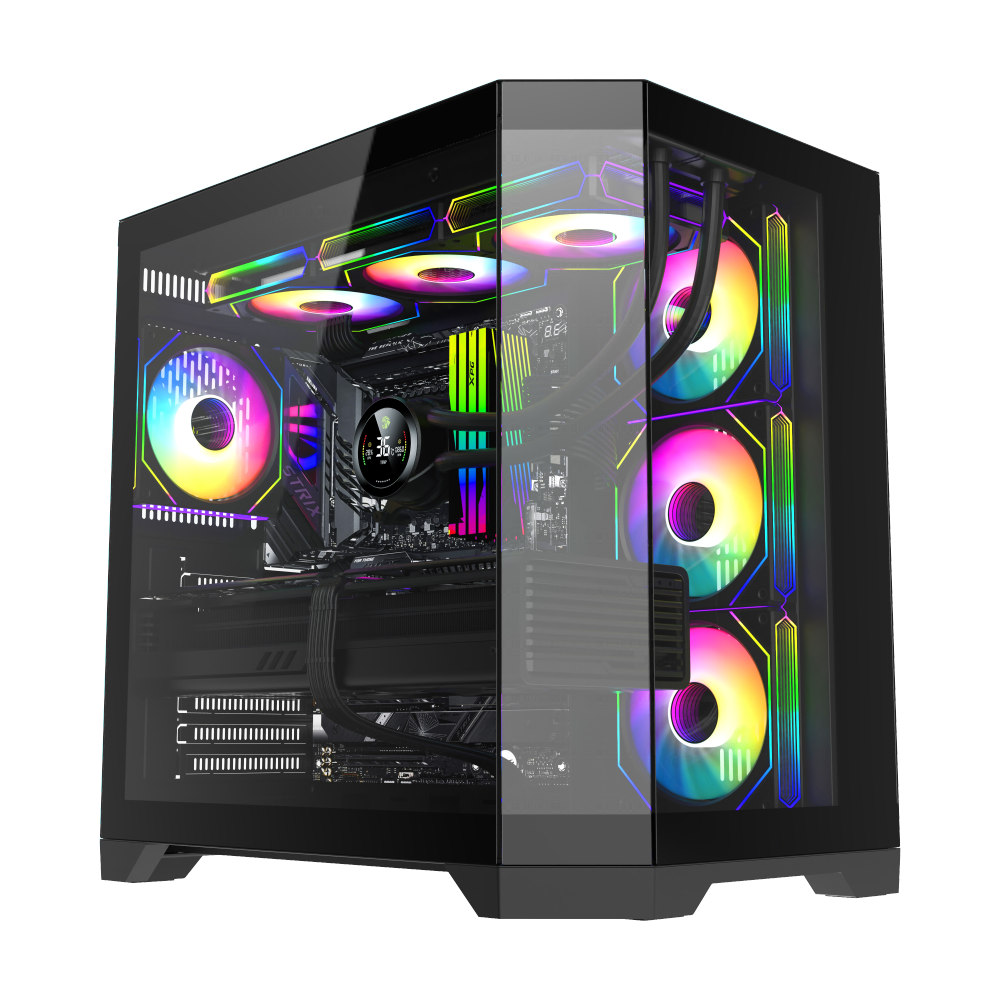
HYPE-A BK provides the GPU clearance and thermal management capabilities that RTX 4090 installations demand. The spacious interior accommodates oversized graphics cards while enabling the airflow configurations that prevent thermal throttling.
Exhaust configuration complements intake capacity, with top and rear exhaust fans creating the pressure differential that drives airflow through the case. Full towers offer multiple exhaust positions that enable various pressure configurations optimized for specific component arrangements. Exhaust planning completes thermal strategy.
Wattage requirements for 4090 systems typically start at 850W for high-end CPUs, with 1000W or higher units providing headroom for overclocking and future expansion. Full tower cases accommodate these larger power supplies with mounting positions and cable routing that support ATX and SFX-L form factors. PSU capacity planning ensures system stability.
12VHPWR power delivery from modern PSUs simplifies 4090 connectivity by providing native cables rather than adapters that add failure points. Full tower cases provide the cable routing space that allows clean connection between PSU and GPU without sharp bends or strain. Native cable support improves reliability.
PSU length clearance matters because high-wattage units often exceed standard dimensions, with 180mm to 200mm lengths common for premium power supplies. Full tower cases typically provide unlimited or very generous PSU clearance, eliminating compatibility concerns that mid-tower cases create. PSU fit should be verified before purchase.
PCIe slot spacing affects multi-GPU configurations or expansion cards that some users require, with full towers providing the unobstructed slots that smaller cases may limit. While 4090 builds rarely use multiple GPUs today, expansion flexibility preserves future options for capture cards, storage controllers, or other additions. Slot accessibility matters for expandability.
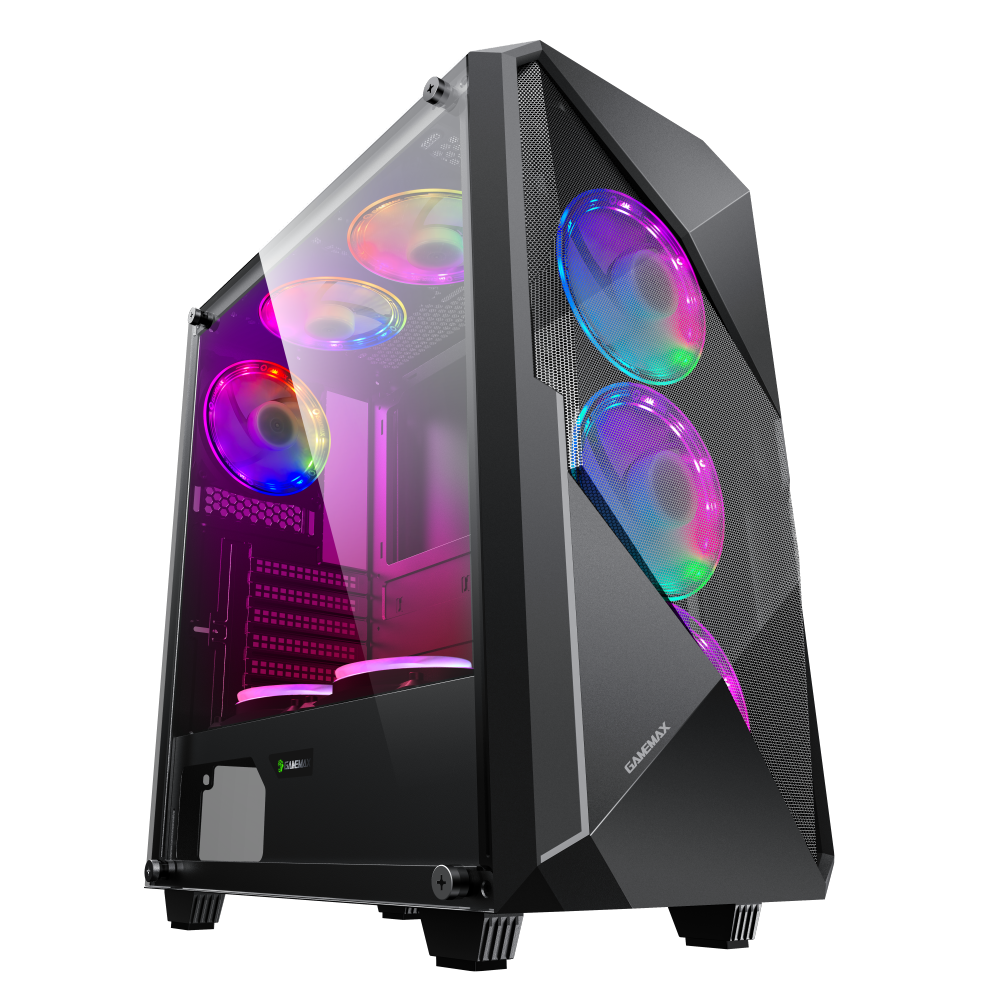
Revolt demonstrates the expansion flexibility that full tower cases provide for high-end graphics card installations. The generous dimensions accommodate current 4090 builds while preserving space for future upgrades and additions.
Storage expansion capacity in full towers accommodates the SSD arrays that content creators and gamers with large libraries require. NVMe slots on motherboards supplement the drive bays that cases provide, creating storage density that smaller chassis cannot match. Storage planning supports long-term needs.
Radiator compatibility for future liquid cooling upgrades benefits from full tower dimensions that accommodate 360mm, 420mm, or larger AIO coolers. Even builders who initially use air cooling may later upgrade to liquid cooling, making radiator support a future-proofing consideration. Cooling upgrade paths preserve investment value.
Working space inside full towers dramatically improves the building experience compared to cramped mid-tower cases, with room to route cables, mount components, and make adjustments without fighting space constraints. The building process becomes more enjoyable and less frustrating in generous dimensions. Build experience affects project satisfaction.
Cable management space behind the motherboard tray in full towers typically provides 25-35mm depth for routing the many cables that high-end builds involve. This space enables clean management that improves airflow and aesthetics while simplifying future modifications. Cable room prevents build compromises.
Component installation order becomes more flexible in full towers because working space allows installing parts in various sequences without creating access problems. The freedom to work efficiently reduces build time and prevents the frustration that cramped cases create. Installation flexibility improves outcomes.
Front panel design significantly affects thermal performance for 4090 builds, with mesh panels providing unrestricted airflow while glass panels restrict intake despite aesthetic appeal. Airflow-oriented designs maintain lower temperatures that benefit both GPU longevity and boost frequency sustainability. Front panel choice reflects priority between aesthetics and performance.
Build quality determines longevity and structural integrity, with thicker steel construction preventing the flex and resonance that thin panels exhibit. Premium materials justify the cost through durability and the premium feel that enthusiasts appreciate. Construction quality affects long-term ownership satisfaction.
Brand reputation for support and warranty coverage provides peace of mind for the significant investment that full tower cases represent. Established manufacturers offer better parts availability and customer service than budget brands with limited support infrastructure. Support quality matters for expensive purchases.

