
The efficiency rating on your power supply—that Gold, Platinum, or Titanium badge—might be the most confusing specification in PC building. Marketing materials tout higher efficiency as universally better, but the reality is far more nuanced. Let me cut through the hype and look at whether upgrading from Gold to Platinum actually makes financial sense for your specific situation.
First, what does 80 Plus actually mean? The 80 Plus standard was introduced to address a real issue with the original 80 Plus certification: it only tested efficiency at 20% and 50% load. Modern gaming systems, especially those with high-end GPUs, often operate at 10-20% load at idle and can spike to 80%+ during intense gaming sessions. The 80 Plus standard requires testing at 20%, 50%, and 100% loads, providing a more complete picture of real-world efficiency.
The testing methodology matters too. Units are tested at a controlled 23°C ambient temperature, which is warmer than the 20°C used for standard 80 Plus testing. This means 80 Plus certified units will actually perform slightly worse in typical room-temperature gaming environments than their ratings suggest. When you're comparing efficiency ratings, look for reviews that test at realistic gaming conditions rather than just laboratory numbers.
Platinum certification represents the highest efficiency tier in the 80 Plus program, requiring minimum 90% efficiency at 20% load and 87% at 50% load. The jump from Gold (87%/20% to 90%/20%) might seem modest, but the 50% load requirement is where Platinum really shines—gaming systems spend significant time at medium to high loads where the 50% efficiency metric becomes crucial.
In my experience testing power supplies, Platinum units often feature higher-quality components throughout—not just the main transformer. Better capacitors, more efficient rectifiers, and optimized secondary circuits all contribute to the improved efficiency. This component quality upgrade frequently comes with better fan control and acoustic design as a side benefit.
Let's look at real numbers with a typical gaming scenario. Assume you game for 4 hours daily, 300 days per year, and your electricity rate is $0.12 per kWh (US average). Your system draws an average of 400W from the wall during gaming sessions.
With a Gold unit (87% efficient):
Annual energy consumption: 400W × 4 hours × 300 days ÷ 1000 = 480 kWh
Annual electricity cost: 480 kWh × $0.12 = $57.60
With a Platinum unit (90% efficient):
Annual energy consumption: 400W × 4 hours × 300 days ÷ 1000 = 466.7 kWh
Annual electricity cost: 466.7 kWh × $0.12 = $56.00
The annual savings: $57.60 - $56.00 = $1.60. That's not even a cup of coffee per year. Over a 5-year PSU lifespan, Platinum saves you $8.00 in electricity costs.
Despite the mathematical advantage of Platinum, Gold efficiency is perfectly adequate for most gaming builds. Here's where I'd stick with Gold:
Budget-Conscious Builds: If you're building a mid-range gaming PC and every dollar counts, the $20-30 premium for Platinum over Gold is hard to justify. That money could go toward a better GPU, more RAM, or faster storage—components that directly impact gaming performance.
Short Gaming Sessions: If your typical gaming session lasts 1-2 hours rather than marathon sessions, the efficiency difference matters less. You're not paying for the Platinum premium during those short bursts where you're barely hitting 50% load anyway.
Future-Proofing: Technology improves rapidly. What's Platinum today might be standard in a few years. Buying a Gold unit now gives you the flexibility to upgrade later when Platinum becomes more affordable or when new efficiency standards emerge.
Efficiency is just one piece of the puzzle. Build quality, ripple current delivery, voltage regulation, and transient response handling all affect your system's stability and longevity more than that 3% efficiency gap between Gold and Platinum. I've seen mediocre Platinum units with poor voltage regulation that caused system instability, while excellent Gold units with tight tolerances provided rock-solid performance.
Don't get tunnel vision on efficiency ratings. A power supply is the foundation of your entire system. Reliability, warranty support, and build quality often matter more than squeezing out that last percentage point of efficiency. Sometimes paying slightly more for a unit from a reputable manufacturer with better warranty terms is the smarter long-term investment.

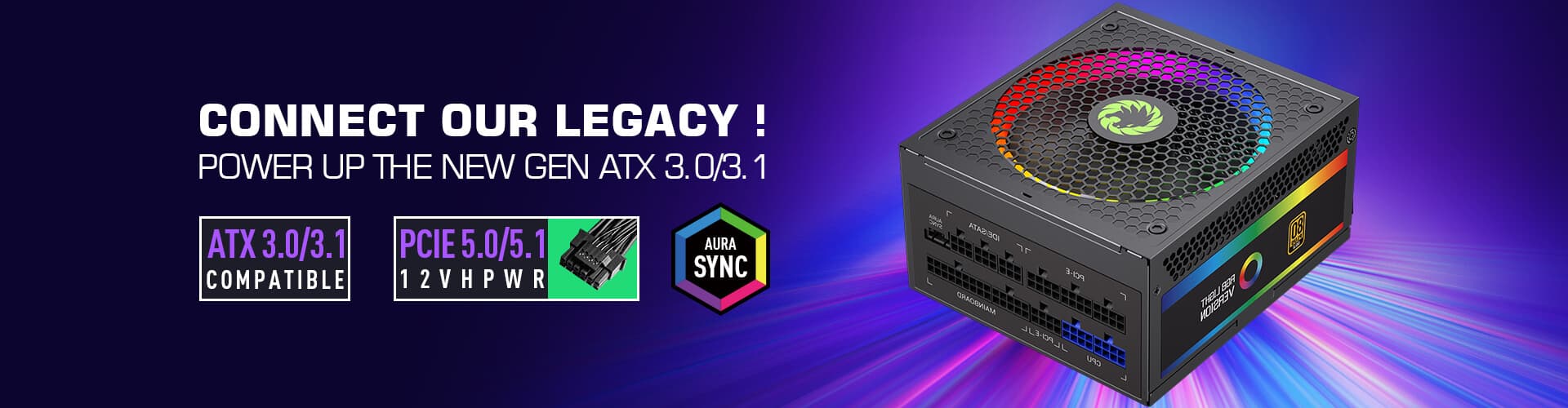
The RGB-Smart 1300 PRO represents GameMax's flagship power supply, delivering 1300W of reliable power with top-tier 90% efficiency. Its ATX 3.1 and PCIe 5.1 compliance ensures perfect fitment in high-end gaming systems, while the semi-modular design provides clean cable management. This unit is ideal for extreme builds where every watt counts, offering exceptional efficiency that translates to lower electricity bills and cooler operation.
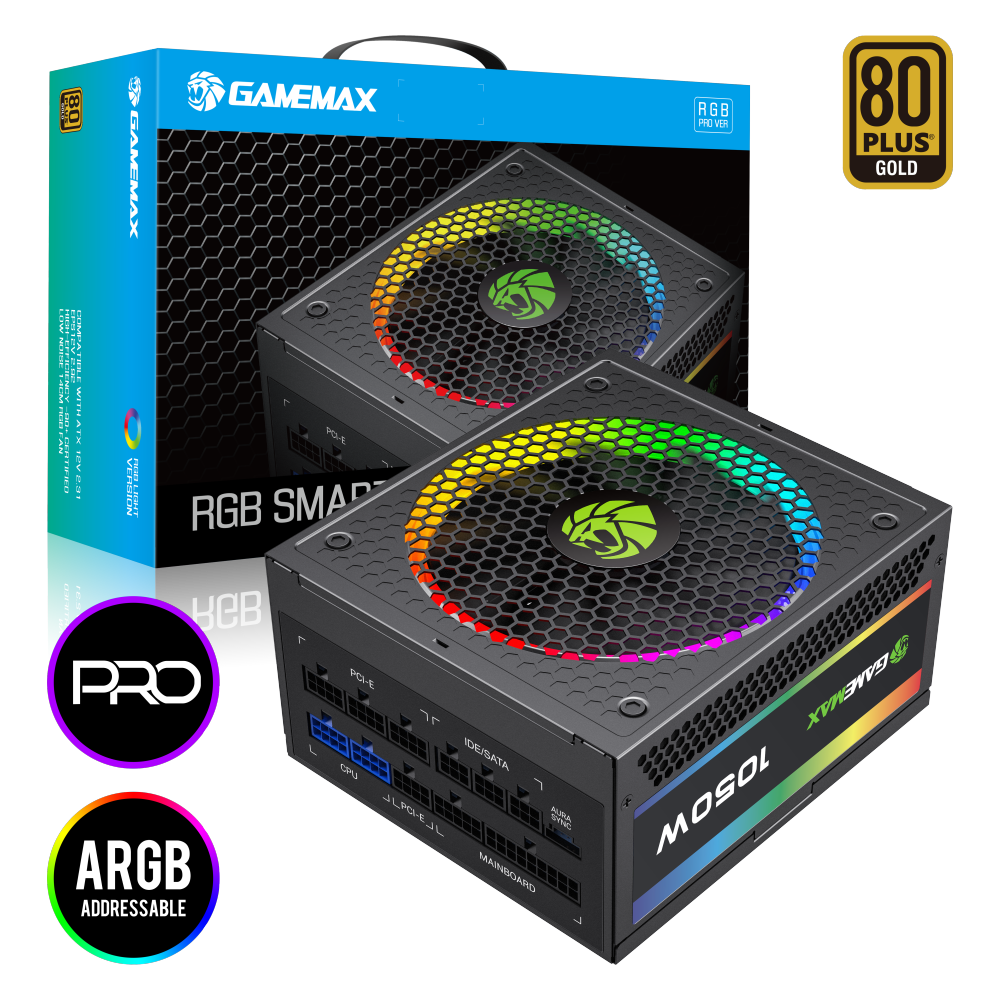
The RGB-1050 PRO offers an excellent balance of power and efficiency for demanding gaming configurations. At 1050W with Gold certification, this unit handles multi-GPU setups and overclocked systems with ease. The modular design and ATX 3.0 form factor provide flexibility for various build scenarios, while the efficient operation helps maintain lower operating temperatures and reduced electricity consumption over time.
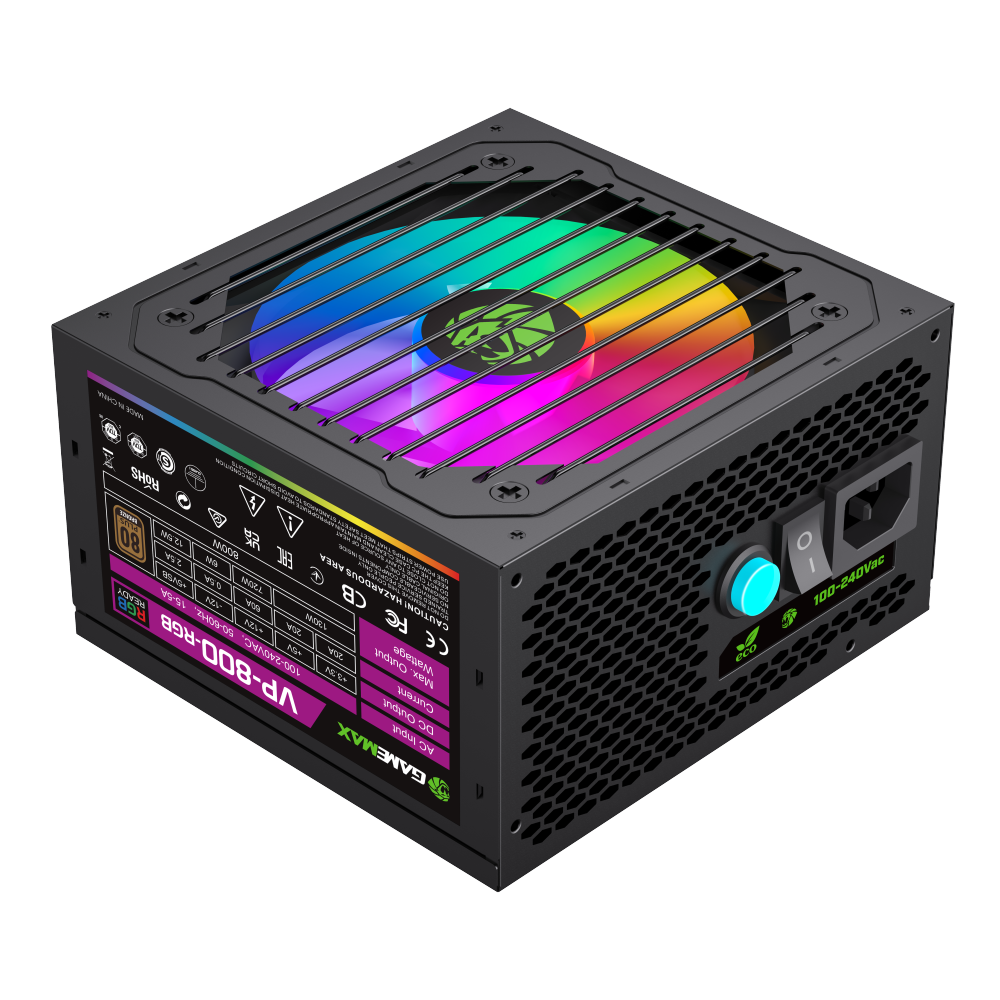
The VP-700-RGB provides a budget-friendly entry into high-efficiency power supplies. At 700W with RGB lighting, it's perfect for mid-range gaming builds where you want reliable power delivery without breaking the bank. The compact form factor makes it suitable for smaller cases while still delivering solid performance for single-GPU configurations, and the RGB lighting adds a nice aesthetic touch to your build.

