
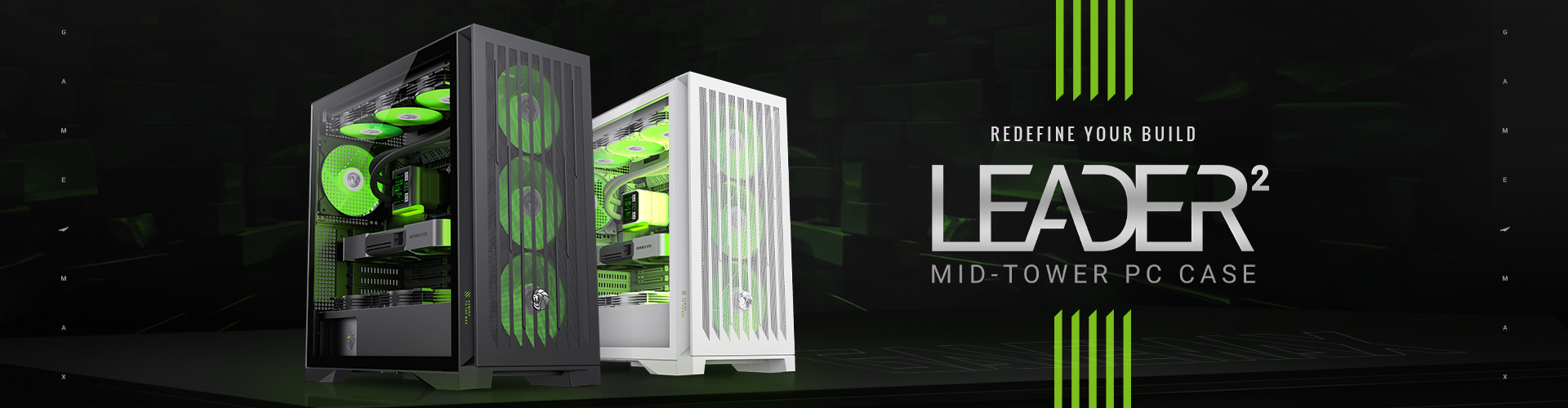
Building a workstation or gaming rig with multiple graphics cards demands a chassis that can accommodate the extra hardware while maintaining optimal thermal performance. Full tower cases have become the go-to choice for enthusiasts running SLI or Crossfire configurations, offering the space and cooling capacity needed for dual or even triple GPU setups.
When selecting a case for multiple GPUs, expansion slot count becomes critical. Standard mid-tower cases typically offer seven PCIe slots, which limits you to a single dual-slot graphics card with minimal breathing room. Full tower chassis, on the other hand, often provide eight or more expansion slots, giving you the flexibility to install multiple dual-slot or even triple-slot GPUs side by side.
Beyond slot capacity, thermal management separates adequate cases from exceptional ones. Multiple GPUs generate substantial heat, and without proper airflow, you will encounter thermal throttling that undermines your investment. The best multi-GPU cases feature mesh front panels, support for numerous fans, and radiator mounts that let you integrate liquid cooling solutions directly into the airflow path.
Cable management also takes on greater importance when running multiple GPUs. With additional power cables, SLI bridges, and PCIe risers in play, a case with generous cable routing space and tie-down points becomes essential. Look for chassis with at least 25mm of cable management depth behind the motherboard tray, along with grommeted routing holes positioned near the power supply and drive bays.
Storage flexibility matters too. Multi-GPU builds often serve as workstations for content creation, AI training, or data science, requiring multiple drives for project files and datasets. Full tower cases typically offer six or more drive bays, letting you configure RAID arrays without sacrificing GPU clearance.
GPU length support is another crucial specification. High-end graphics cards like the RTX 4090 can exceed 340mm in length, and running multiple cards may require even more clearance depending on your motherboard layout. Full tower cases routinely support GPUs up to 400mm or more, ensuring compatibility with current and future flagship cards.
Power supply mounting position affects airflow in multi-GPU setups. Bottom-mounted PSUs with filtered intakes keep the power supply drawing cool air from beneath the case, while top-mounted designs may recirculate GPU exhaust. Most modern full tower cases use bottom-mounted layouts with shrouds that isolate the PSU thermally and visually.
When planning your multi-GPU build, consider the physical spacing between cards. NVIDIA recommends at least two slots of clearance between SLI cards for adequate airflow, while AMD Crossfire configurations can run cards adjacent but still benefit from spacing. Your case choice directly impacts whether you can achieve these clearances while maintaining acceptable temperatures.
The following cases represent excellent options for multi-GPU builds, offering the expansion capacity, cooling support, and build quality needed for reliable SLI and Crossfire configurations.

Full tower gaming case supporting EATX/ATX/M-ATX/ITX, 420mm GPU, 170mm CPU cooler, 8 HDD bays, 3 external 5.25 bays, ARG...
This full tower chassis delivers exceptional expansion capability with its E-ATX motherboard support and eight expansion slots. The spacious interior accommodates GPUs up to 420mm in length, while the included ARGB PWM fan controller helps manage thermals across multiple graphics cards. With three external 5.25-inch bays and eight HDD mounting positions, storage expansion remains flexible even with dual GPUs installed.

Full tower gaming case with dual tempered glass side panels, E-ATX support, metal front and top panel, 1.2mm steel chass...
Featuring dual tempered glass side panels and a robust 1.2mm steel chassis, this full tower case combines structural rigidity with aesthetic appeal. The E-ATX compatibility and seven expansion slots support multi-GPU configurations, while the integrated ARGB HUB controller synchronizes lighting across your graphics cards and case fans. The metal front and top panels provide excellent mounting options for radiators up to 360mm.
When configuring a multi-GPU system, pay attention to your motherboard's PCIe slot spacing. Some E-ATX boards position the primary x16 slots three spaces apart, while others use two-slot spacing. Your case must provide enough clearance for your specific board layout, particularly if you plan to use thick triple-slot cards.
Cooling strategy becomes paramount with multiple GPUs. A front-to-back airflow pattern works well for dual-card setups, with intake fans pushing cool air directly across the graphics cards and exhaust fans removing heated air. For three or four GPU configurations, consider adding side panel fans or a custom water cooling loop that directly cools each card.
Power supply selection also scales with GPU count. Dual RTX 4080 cards may draw 600W combined under load, while the RTX 4090 can exceed 450W per card. Pair your multi-GPU case with a 1200W or higher PSU, and ensure the case provides adequate PSU length clearance for these larger units.
Finally, consider future upgrade paths when selecting your case. Even if you currently run a single GPU, choosing a full tower chassis with multi-GPU support gives you the option to add a second card later without replacing your entire enclosure. The cases highlighted above offer the expansion headroom to grow with your computing needs.

