
Custom water cooling has evolved from an extreme enthusiast pursuit into a practical thermal solution for anyone running high-end hardware that generates serious heat. Modern flagship CPUs from Intel and AMD can draw over 250 watts under sustained load, and top-tier graphics cards push well past 400 watts. Air cooling, even the best tower coolers on the market, simply cannot dissipate that level of thermal output quietly and consistently. A custom liquid cooling loop solves this by transporting heat away from critical components through a network of tubing, water blocks, radiators, and pumps, keeping temperatures stable even during extended gaming sessions or demanding rendering workloads.
However, the case you build in determines whether your custom loop reaches its full potential or becomes a frustrating exercise in compromise. A full tower chassis provides the interior volume, radiator mounting flexibility, and structural support that custom water cooling demands. Cramped mid-tower cases often force builders to use smaller radiators, fewer fans, and restrictive tubing runs that undermine cooling performance. Full tower cases eliminate these constraints, giving you the freedom to design a loop that maximizes thermal dissipation without sacrificing aesthetics or build quality.
The foundation of any custom water cooling build is radiator capacity. Each component in your loop contributes heat that must be rejected through radiator surface area. A general rule of thumb suggests at least one 120mm radiator section per 100 watts of heat, meaning a system with a 250W CPU and a 400W GPU needs roughly 650W of cooling capacity, or about seven 120mm fan positions. Full tower cases routinely accommodate 360mm radiators on both the front and top panels, plus 240mm or even 360mm on the side or bottom, giving you eight or more 120mm equivalent positions. This headroom ensures your fans can spin at comfortable, quiet RPMs while maintaining excellent temperatures.
Radiator thickness is another factor that full tower cases handle gracefully. Standard AIO radiators measure 27mm thick, but custom loops often use 45mm or even 60mm thick radiators for increased fin density and thermal mass. A 60mm radiator with push-pull fans can occupy over 110mm of chassis depth, which eliminates many mid-tower cases from consideration. Full tower chassis with their generous interior dimensions accommodate these thick radiators without interfering with motherboard components, RAM clearance, or GPU mounting.
Pump and reservoir placement becomes significantly easier in a full tower. The pump needs to be mounted securely to minimize vibration and noise, while the reservoir should be positioned at the highest point in the loop for easy filling and bleeding. Full tower cases offer multiple mounting locations: the front panel, the PSU shroud, the motherboard tray, or dedicated pump brackets. This flexibility lets you position components for optimal flow dynamics and visual presentation, rather than forcing them into whatever space happens to be available.
Tubing routing in a custom loop requires careful planning, and a full tower gives you the room to execute clean, sweeping bends rather than tight, kinked corners that restrict coolant flow. Hardline acrylic or PETG tubing needs straight runs of at least 100mm between bends to avoid stress fractures, and soft tubing benefits from gentle curves that maintain full internal diameter. The additional space behind the motherboard tray in full tower cases also makes it easier to route the tubing runs that connect front-mounted radiators to the CPU and GPU blocks without crossing over the motherboard in unsightly tangles.
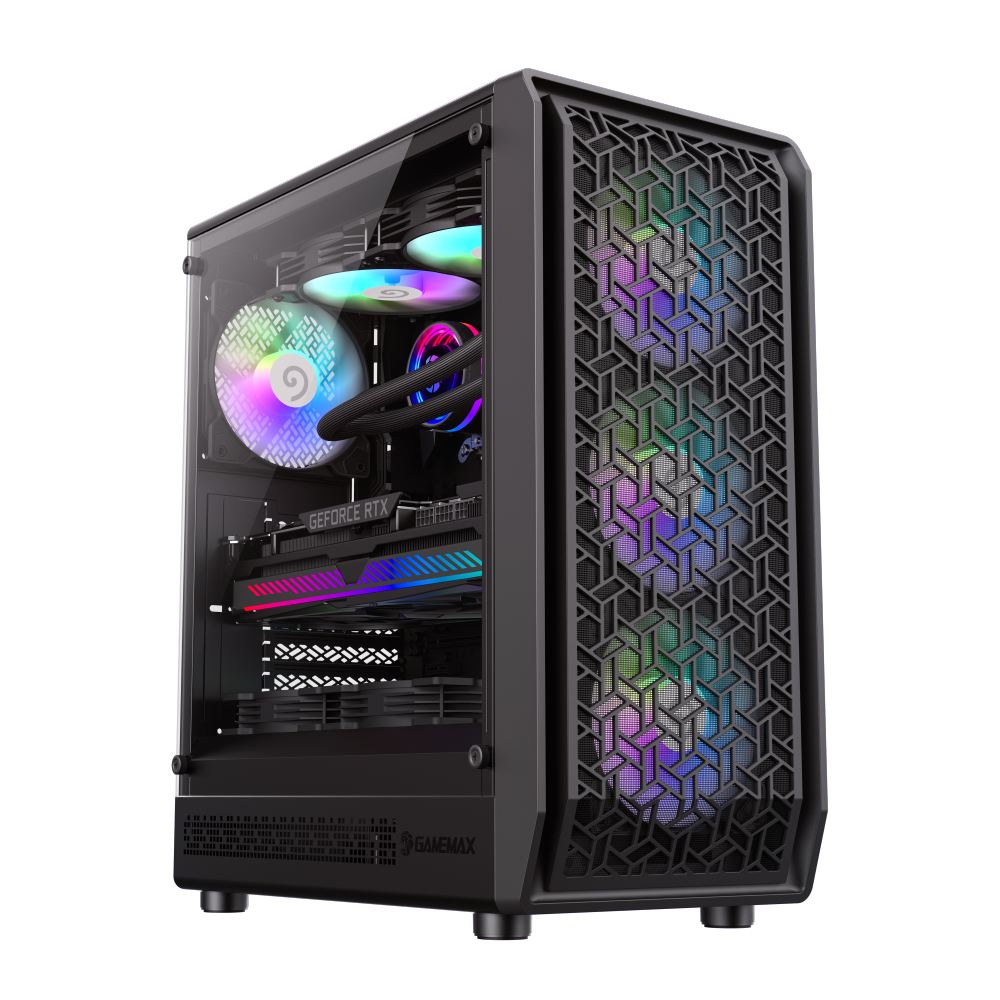
Forge AB Premium Mid Tower ATX PC Case by GameMax: • Unique Airflow & Cooling: Forge AB Premium features a unique airflow design with 6 ARGB fans and 360mm radiator support for opt
The Forge AB brings exceptional versatility to custom water cooling builds with its spacious interior and comprehensive radiator support. This full tower chassis accommodates radiators up to 360mm on the top panel and additional mounting positions on the front, giving builders the flexibility to configure dual-radiator loops for separate CPU and GPU cooling circuits. The hinged tempered glass side panel provides easy access to the interior for loop maintenance, refill operations, and component upgrades without requiring complete disassembly. The robust steel frame construction ensures that the weight of filled radiators, water blocks, and tubing remains securely supported even during transport, while the integrated cable management channels behind the motherboard tray keep the visual focus on your carefully designed cooling loop.
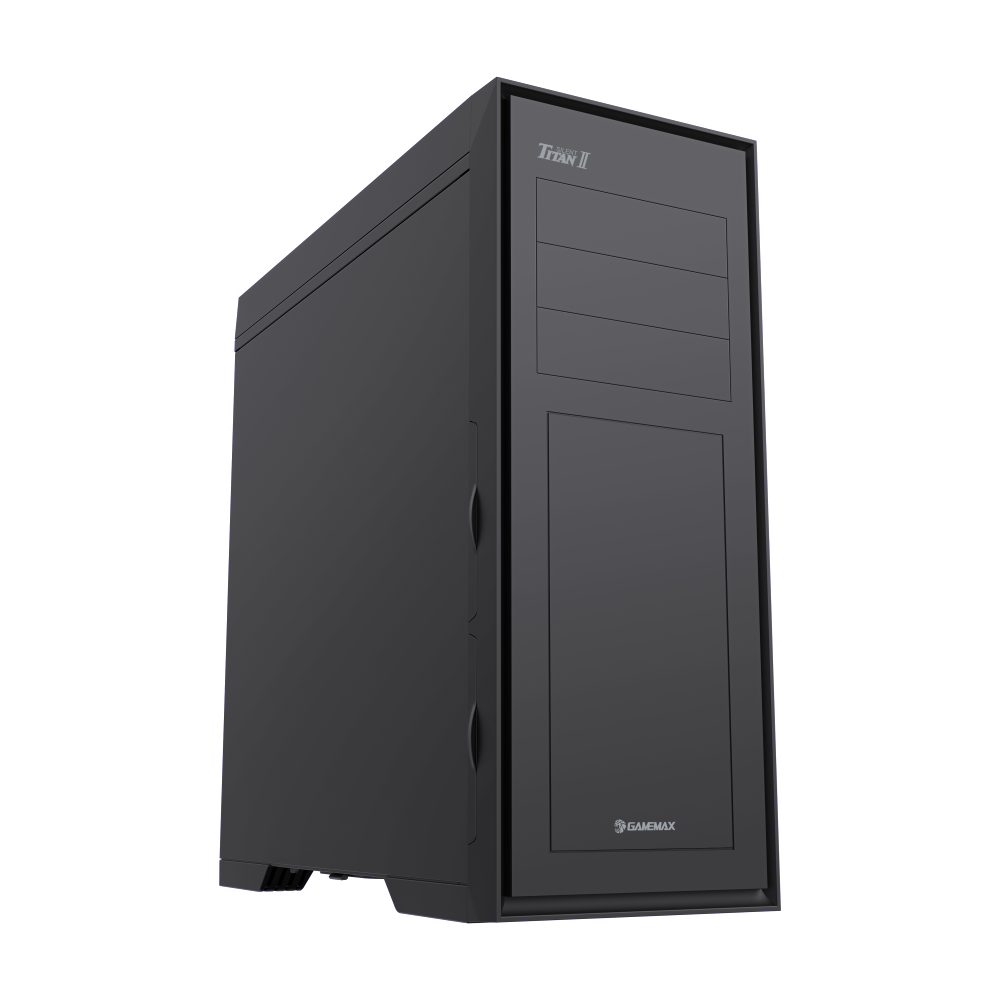
Full tower gaming case with noise-reducing materials, supports EATX/ATX/M-ATX, 420mm GPU support, dust protection with top and bottom filters.
The Titan Silent 2 takes a unique approach by combining custom water cooling support with integrated noise-reducing materials throughout the chassis. This full tower case accommodates E-ATX motherboards and graphics cards up to 420mm in length, providing ample space for large dual-radiator configurations. The noise-dampening panels on both side panels and the top cover help contain the subtle hum of pump operation and fan noise, making it an excellent choice for builders who want the thermal performance of custom liquid cooling without the acoustic footprint. The dust protection system with top and bottom filters keeps radiator fins clean over extended use, maintaining optimal heat transfer efficiency. With dedicated mounting points for pump and reservoir assemblies and generous clearance for thick radiator configurations, the Titan Silent 2 bridges the gap between enthusiast performance and professional quietness.
When planning your custom loop in a full tower case, start by mapping out your radiator configuration before purchasing any components. Measure the available mounting positions and verify compatibility with your chosen radiator thickness and fan arrangement. Consider a push-pull fan configuration on your primary radiator if you have the clearance, as this can improve cooling performance by 15-25 percent over single-fan setups. Plan your tubing runs to minimize the total length of the loop, as shorter runs reduce flow resistance and improve pump efficiency.
Fill port accessibility is often overlooked during the planning phase but becomes critical during maintenance. Position your reservoir where you can easily access its fill port without disassembling major components. Some full tower cases include dedicated fill port cutouts on the top panel, allowing you to top up coolant through the roof of the case. If your case does not have this feature, consider mounting the reservoir near the top of the front panel with the fill cap accessible through a removable panel.
Drain port placement is equally important for long-term maintenance. Every custom loop should include a drain valve at the lowest point in the circuit, allowing you to empty the coolant quickly and cleanly when performing maintenance or component upgrades. Full tower cases with bottom-mounted radiators often provide natural drain points, while cases without bottom mounting may require you to install a T-fitting with a drain valve in a lower tubing run.
Finally, consider the weight of your completed system. A full tower case with a custom loop can easily exceed 25 kilograms when filled with coolant. Ensure your desk or floor stand can support this weight, and use the case handles or a helper when moving the system for maintenance. The investment in a quality full tower case pays dividends throughout the life of your custom loop, providing the space, flexibility, and structural integrity needed for a cooling system that performs as beautifully as it looks.

