

In the ever-evolving world of PC gaming, the CPU remains a crucial component that can make or break your gaming experience. A powerful CPU ensures smooth gameplay, high frame rates, and quick load times, allowing you to fully immerse yourself in the virtual worlds you love. With so many options on the market, choosing the best CPU for gaming can be a daunting task. In this article, we'll explore the key factors to consider when selecting a gaming CPU and recommend some of the top performers in 2025.
The clock speed, measured in gigahertz (GHz), determines how many instructions a CPU can execute per second. A higher clock speed generally results in better single-core performance, which is crucial for many games that rely heavily on a single core to handle tasks such as physics calculations, AI processing, and game logic. For example, in fast-paced first-person shooters like "Call of Duty" or "Valorant," a CPU with a high clock speed can provide the quick response times needed to outmaneuver your opponents. When choosing a gaming CPU, look for models with high base and boost clock speeds to ensure optimal performance in single-threaded applications.
Modern games are increasingly designed to take advantage of multi-core processors. A higher core count allows the CPU to handle multiple tasks simultaneously, such as running background processes, streaming gameplay, or rendering complex game worlds. In open-world games like "The Elder Scrolls V: Skyrim" or "Red Dead Redemption 2," which require significant processing power to render vast landscapes and numerous NPCs, a CPU with a high core count can help maintain smooth frame rates. However, it's important to note that not all games are well-optimized for multi-core processors, and in some cases, a CPU with fewer cores but higher clock speeds may perform better. Consider your gaming habits and the types of games you play most often when deciding on the ideal core count for your gaming CPU.
Cache is a small, high-speed memory located on the CPU die that stores frequently accessed data and instructions. A larger cache can reduce the time it takes for the CPU to access data from the slower main memory, resulting in improved performance. There are three levels of cache: L1, L2, and L3. L1 cache is the smallest and fastest, while L3 cache is the largest and slowest. In games, a larger L3 cache can be particularly beneficial, as it can store more data related to the game, such as textures, models, and game code. This can help reduce loading times and improve overall gameplay smoothness. Look for CPUs with generous cache sizes, especially L3 cache, to enhance your gaming performance.
The architecture of a CPU refers to its design and the way it processes data. Newer architectures often offer improved performance, efficiency, and features compared to older ones. For example, AMD's Zen 4 architecture, which powers its latest Ryzen processors, features significant improvements in IPC (Instructions Per Cycle), resulting in better performance per core. Intel's Raptor Lake architecture also brings several enhancements, including increased core counts and improved clock speeds. When choosing a gaming CPU, consider the latest architectures available to ensure you're getting the best performance and future-proofing your system.
CPU Model | Cores/Threads | Base Clock Speed | Boost Clock Speed | L3 Cache | Architecture | Key Features | Ideal For |
AMD Ryzen 7 9800X3D | 8/16 | 4.2 GHz | 5.0 GHz | 96MB | Zen 5 with 3D V-Cache | Massive L3 cache, exceptional gaming performance | Enthusiasts seeking top-tier gaming performance |
Intel Core i5 13400F | 10 (6P+4E)/16 | 2.5 GHz | 4.6 GHz | 20MB | Raptor Lake | Budget-friendly, solid 1080p performance | Budget gamers building an affordable rig |
AMD Ryzen 7 7700X | 8/16 | 4.5 GHz | 5.4 GHz | 32MB | Zen 4 | Balances gaming and multitasking well | Mid-range users needing versatility |
Intel Core i9 14900K | 24 (8P+16E)/32 | 3.2 GHz | 5.8 GHz | 36MB | Raptor Lake Refresh | High core count, great for content creation | Gamers who also do heavy content creation |
AMD Ryzen 9 9950X3D | 16/32 | 4.2 GHz | 5.0 GHz | 128MB | Zen 5 with 3D V-Cache | Largest L3 cache, handles demanding tasks | Power users needing top performance for gaming and multitasking |
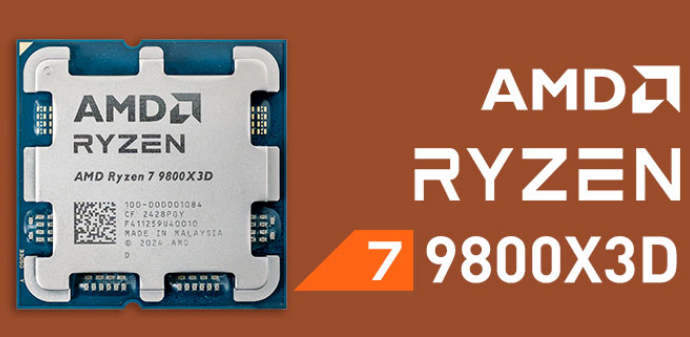
The AMD Ryzen 7 9800X3D is currently the king of gaming CPUs. It features 8 cores and 16 threads, with a base clock speed of 4.2 GHz and a boost clock speed of up to 5.0 GHz. What sets this CPU apart is its 3D V-Cache technology, which adds an extra layer of L3 cache, bringing the total L3 cache size to a whopping 96MB. This massive cache significantly improves performance in games, especially those that are cache-sensitive. In our tests, the Ryzen 7 9800X3D outperformed competing CPUs in most gaming benchmarks, delivering smooth frame rates and excellent responsiveness. If you're looking for the absolute best gaming performance and don't mind spending a bit more, the AMD Ryzen 7 9800X3D is the clear choice.

For budget-conscious gamers, the Intel Core i5 13400F offers excellent value for money. It features 6 performance cores and 4 efficiency cores, for a total of 10 cores and 16 threads. The base clock speed is 2.5 GHz, with a boost clock speed of up to 4.6 GHz. While it may not have the same level of performance as the more expensive CPUs on this list, the Core i5 13400F still delivers solid gaming performance, especially in 1080p gaming. It also has a relatively low power consumption, making it a great choice for those looking to build a budget-friendly gaming PC. If you're on a tight budget but still want a CPU that can handle most games smoothly, the Intel Core i5 13400F is a great option.
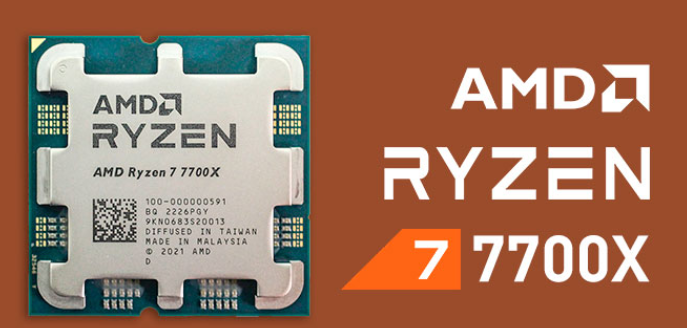
The AMD Ryzen 7 7700X is a mid-range gaming CPU that offers a great balance of performance and price. It features 8 cores and 16 threads, with a base clock speed of 4.5 GHz and a boost clock speed of up to 5.4 GHz. The Ryzen 7 7700X also has a decent amount of cache, with 32MB of L3 cache. In gaming benchmarks, it performs well, delivering smooth frame rates in most games. It's also a good choice for multitasking, as it can handle running multiple applications simultaneously without a significant performance drop. If you're looking for a mid-range CPU that can handle both gaming and multitasking with ease, the AMD Ryzen 7 7700X is worth considering.
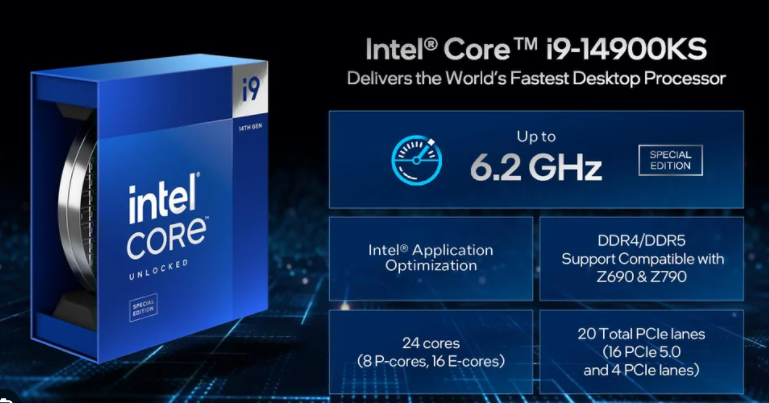
The Intel Core i9 14900K is a high-end gaming CPU that offers top-of-the-line performance. It features 8 performance cores and 16 efficiency cores, for a total of 24 cores and 32 threads. The base clock speed is 3.2 GHz, with a boost clock speed of up to 5.8 GHz. The Core i9 14900K also has a large cache, with 36MB of L3 cache. In gaming benchmarks, it performs extremely well, delivering high frame rates in even the most demanding games. It's also a great choice for content creation and other CPU-intensive tasks, as it can handle multitasking and complex workloads with ease. If you're a serious gamer or content creator who demands the best performance from your CPU, the Intel Core i9 14900K is an excellent choice.
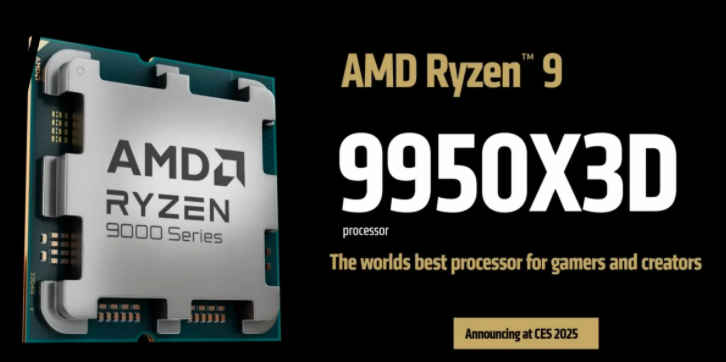
The AMD Ryzen 9 9950X3D is another high-end gaming CPU that offers exceptional performance. It features 16 cores and 32 threads, with a base clock speed of 4.2 GHz and a boost clock speed of up to 5.0 GHz. Like the Ryzen 7 9800X3D, the Ryzen 9 9950X3D also features 3D V-Cache technology, which adds an extra layer of L3 cache, bringing the total L3 cache size to a massive 128MB. This makes it one of the most powerful gaming CPUs on the market, capable of delivering smooth frame rates and excellent responsiveness in even the most demanding games. If you're looking for a CPU that can handle the most demanding games and multitasking with ease, the AMD Ryzen 9 9950X3D is a great choice.
Choosing the best CPU for gaming in 2025 depends on your budget, gaming habits, and performance requirements. By considering factors such as clock speed, core count, cache, and architecture, you can narrow down your options and find the CPU that's right for you. Whether you're a budget-conscious gamer looking for a solid performer or a high-end enthusiast who demands the best, there's a gaming CPU out there that can meet your needs. So, do your research, compare your options, and choose the CPU that will unleash your gaming performance and take your gaming experience to the next level.

